Best Miter Saws for Beginners in 2026: Top 3 Picks for Every Budget
Picking your first miter saw can feel like a bigger decision than it needs to be. Walk into any hardware store and you’ll find a wall of options — different blade sizes, amp ratings, bevel types, and price points that stretch from $100 to well over $500. The good news: for most beginners, the choice comes down to three solid picks that cover every budget. Whether you’re trimming baseboards, building a workbench, or framing out a small deck, one of these miter saws will do exactly what you need.
What Makes a Miter Saw Beginner-Friendly?
Not every miter saw is created equal when it comes to ease of use. For beginners, the most important features are clear angle markings, a reliable positive-stop detent system (preset clicks at common angles like 45° and 22.5°), and a sturdy fence that holds workpieces flat. A built-in dust bag or port makes cleanup far less miserable — something you’ll appreciate after your first major cutting session.
Blade size is the other big decision. A 10-inch saw handles most trim work and dimensional lumber up to about 6 inches wide. A 12-inch blade gives you more cutting capacity but adds weight and cost. Single-bevel saws tilt in one direction and are simpler to learn; dual-bevel saws tilt both ways, saving time when you need matching angles on opposite sides of a cut. For beginners, a 10-inch or 12-inch single-bevel compound saw is almost always the right starting point.
Quick Comparison
| Product | Best For | Price | Buy |
|---|---|---|---|
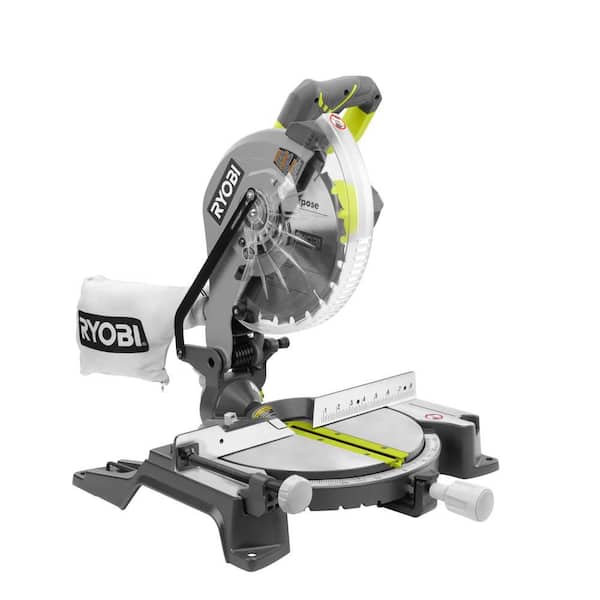 Ryobi TS1346 Ryobi TS1346 |
Best budget beginner pick | ~$129 | Check Price |
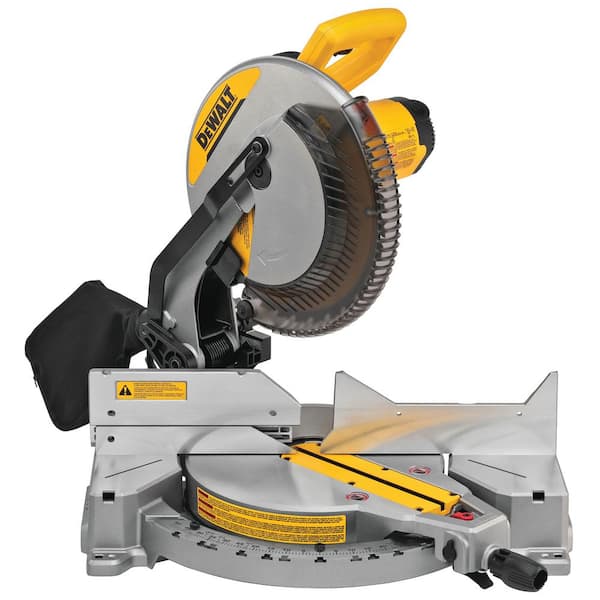 DEWALT DWS715 DEWALT DWS715 |
Best overall for beginners | ~$199 | Check Price |
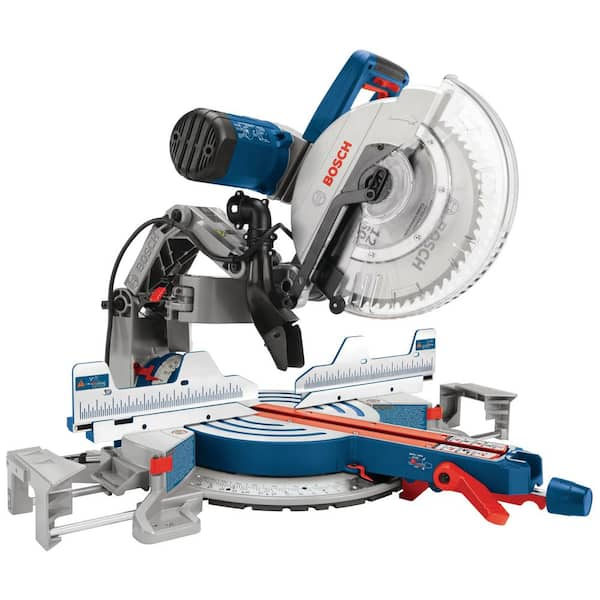 Bosch GCM12SD Bosch GCM12SD |
Best premium investment | ~$499 | Check Price |
1. Ryobi TS1346 — Best Budget Pick for Beginners
If your budget is tight but you still want a capable, reliable saw, the Ryobi TS1346 is the one to beat. This 10-inch compound miter saw runs on a 14-amp motor that delivers 5,500 RPM — plenty of power for crosscutting 2×8 lumber, trimming door casings, and cutting crown molding for everyday DIY projects.
The standout feature for beginners is the built-in LED cutline indicator. Unlike laser guides that require calibration and drift over time, the LED casts a shadow line directly onto your workpiece, showing you exactly where the blade will enter the wood. It’s a small detail, but it dramatically reduces wasted cuts when you’re learning. The TS1346 also includes a dust bag — not a full dust port, but functional enough for a home garage or shop.
The saw makes miter cuts up to 45° left and right and bevel cuts up to 45° left. It doesn’t have sliding capability or dual bevel, but for most beginner projects those aren’t limitations that matter. At around $129, it’s a genuine value buy that gives you room to invest in other tools as you build out your shop.
2. DEWALT DWS715 — Best Overall Miter Saw for Beginners
The DEWALT DWS715 is the saw that consistently tops “best miter saw for beginners” lists — and for good reason. Its 15-amp motor and 12-inch blade deliver serious cutting capacity, handling stock up to 2×12 and crown molding up to 5-1/2 inches nested against the fence. That kind of capacity means you won’t find yourself wishing for a bigger saw six months down the road.
What really makes the DWS715 shine for beginners is the precision of its adjustment system. The stainless-steel miter detent plate has 11 positive stops that lock in with a reassuring click at the most common angles — 0°, 15°, 22.5°, 31.6°, and 45° on both sides. The cam-lock miter handle lets you dial in custom angles and lock them down firmly, so the saw stays exactly where you set it.
The DWS715 makes single-bevel cuts (0–48° right, 0–3° left) and has a back fence that accommodates tall stock without clamping gymnastics. Build quality is excellent — this is a saw that holds its calibration through heavy use. At around $199, it costs $70 more than the Ryobi but delivers a noticeably better cutting experience. If you can stretch the budget, this is the one to get.
3. Bosch GCM12SD — Best Premium Miter Saw (Buy Once, Use Forever)
The Bosch GCM12SD is not your typical beginner recommendation — but it deserves a spot on this list for beginners who want to invest once in a professional-grade tool rather than upgrading in two years. This 12-inch dual-bevel sliding glide miter saw is built to a higher standard than anything else in its class, and it shows in every cut.
The GCM12SD’s signature feature is Bosch’s Axial-Glide System, which replaces traditional sliding rails with a patented glide mechanism. This design lets the saw operate just 3.5 inches from a wall — a major advantage in tight workshops — while still delivering a full 14-inch crosscut capacity. The bevel swings 0–47° in both directions, and the miter range extends 60° left and right, meaning there is almost no cut this saw can’t make.
Accuracy is exceptional. The Square-Lock fence holds material at a perfect 90° and resists flex even under pressure from large stock. Every adjustment is smooth and stays put. The catch is price — at around $499, the GCM12SD costs more than 2.5 times the DEWALT. But if you’re serious about woodworking and plan to use your miter saw for years, it’s the tool that professionals reach for every day.
Buying Guide: 5 Things to Consider Before You Buy
Blade size: 10-inch blades work well for most trim and framing tasks. Step up to 12 inches if you’re regularly cutting wide stock or crown molding wider than 4 inches. Bevel type: Single-bevel saws are simpler and cheaper; dual-bevel saws save time when cutting compound angles on both ends of a board. Sliding vs. non-sliding: Sliding saws greatly increase crosscut capacity but add size and cost. Most beginners don’t need sliding capability right away. Dust collection: Look for a dedicated 1-1/4″ or 1-1/2″ dust port so you can hook up a shop vac — it keeps your workspace much cleaner than a dust bag alone. Weight: If you’ll move the saw between a garage and a job site, keep weight in mind — the Ryobi TS1346 is the lightest of these three at about 27 lbs, while the Bosch GCM12SD weighs in at 65 lbs.
Final Verdict
For most beginners, the DEWALT DWS715 is the clear winner — it offers the best blend of cutting capacity, build quality, and ease of use at a price that won’t break the bank. If money is tighter, the Ryobi TS1346 punches well above its weight with an LED cutline that helps new users cut accurately from day one. And if you’re ready to invest in a saw that professionals trust, the Bosch GCM12SD is simply in a class of its own.
Any of these three will handle the vast majority of projects a beginner tackles. Start with the one that fits your budget, master the basics of safe and precise cutting, and you’ll be building furniture, framing walls, and finishing rooms before you know it.