Best Cordless Chainsaws of 2026: 4 Battery Saws Tested Against the Gas Standard
A cordless chainsaw used to mean a saw you kept in the shed for pruning. That stopped being true a few years ago.
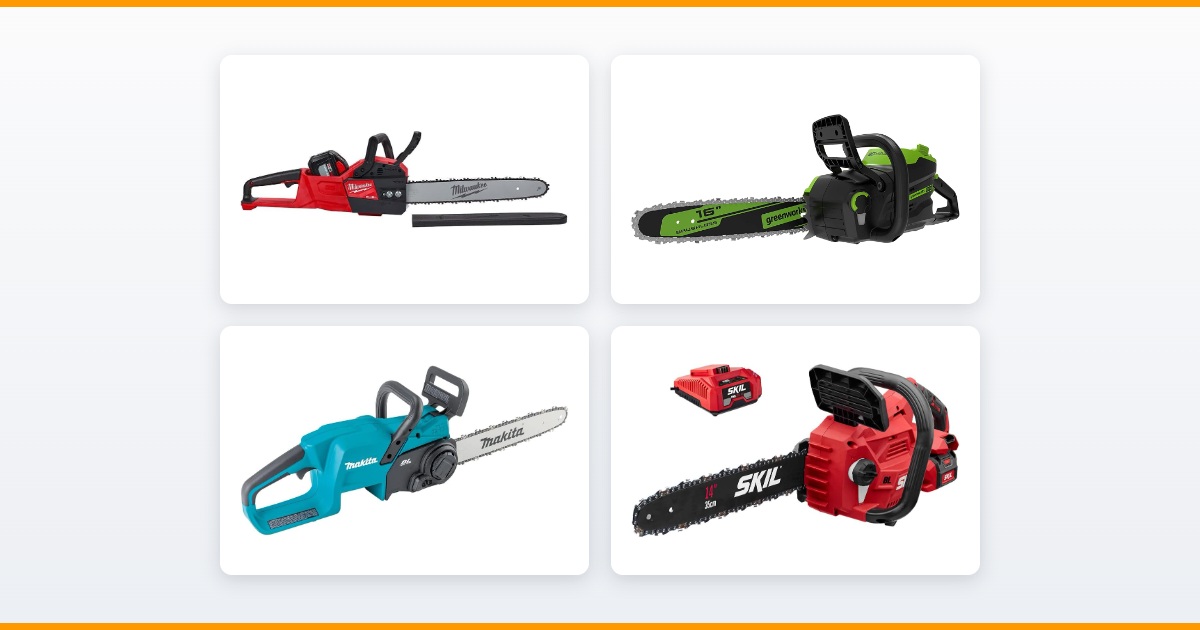
The four saws below all run brushless motors, auto-oilers and chain brakes, and the top two genuinely stand in for a 40–45cc gas saw on storm cleanup and firewood.
What separates them is not really cutting power. It is bar length, weight, and whether you already own batteries on that platform.
Below are the specs I could verify from the manufacturers, honest notes on where each saw gives something up, and who each one actually suits.
Quick Comparison
| Model | Bar | Platform | Weight | Typical price | ||
|---|---|---|---|---|---|---|
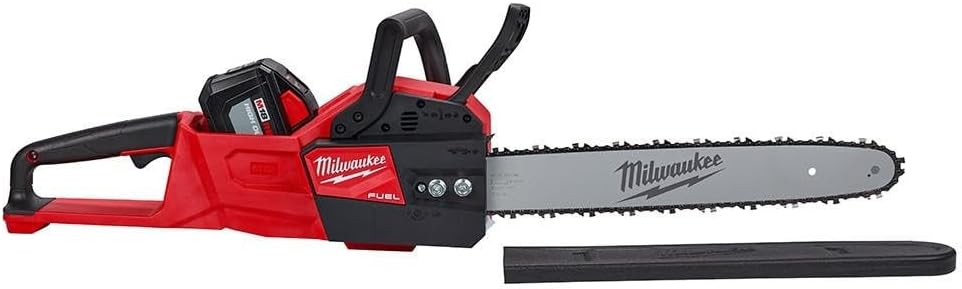 | Milwaukee M18 FUEL 2727-21HD Best overall / pro use | 16″ | M18 (18V) | 13.7 lb bare | ~$549 kit | Check Price |
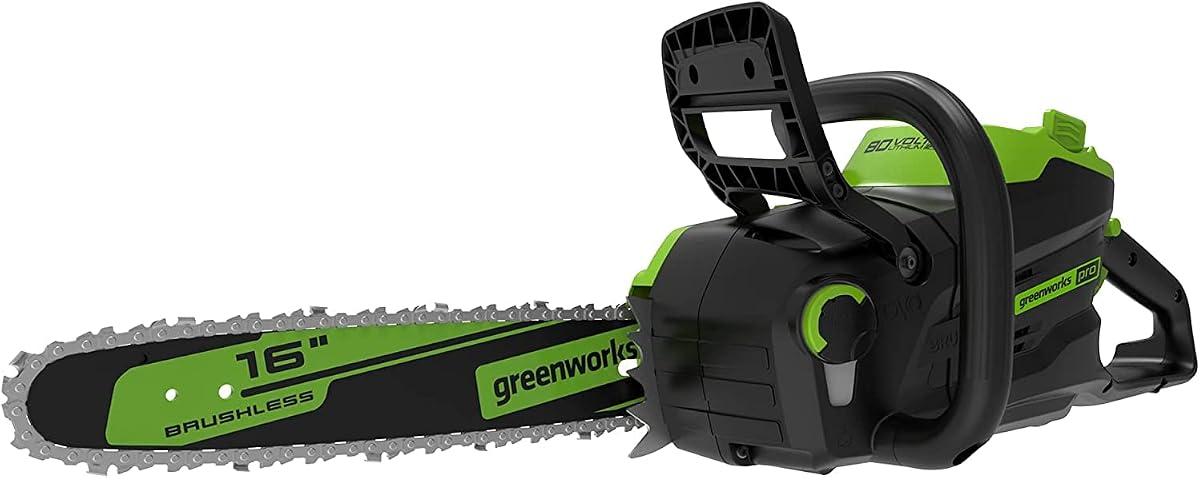 | Greenworks 80V 16″ Most power per dollar | 16″ | Greenworks 80V | ~12.1 lb shipped | $249.99 bare tool | Check Price |
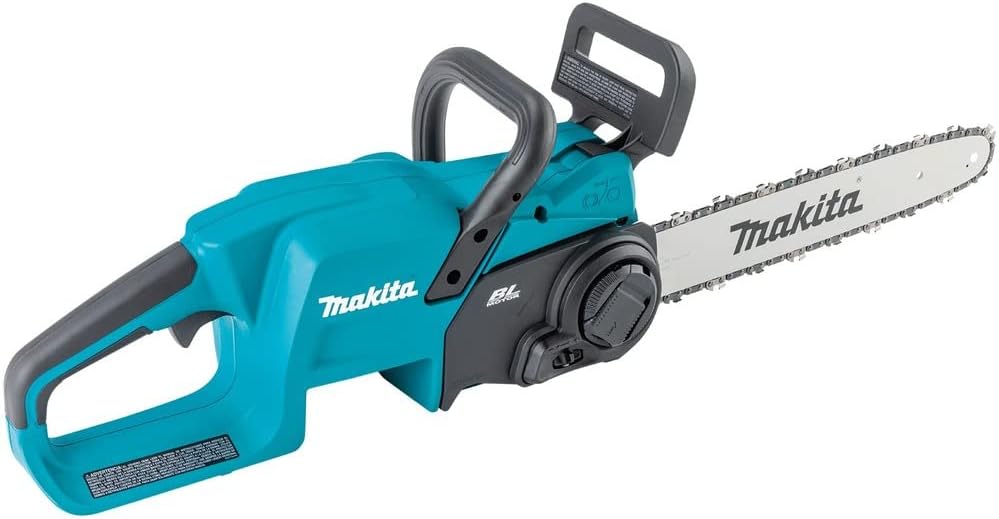 | Makita XCU11Z Lightest of the four | 14″ | Makita 18V LXT | 7.9 lb bare / 9.3 lb w/ battery | $197.71 bare tool | Check Price |
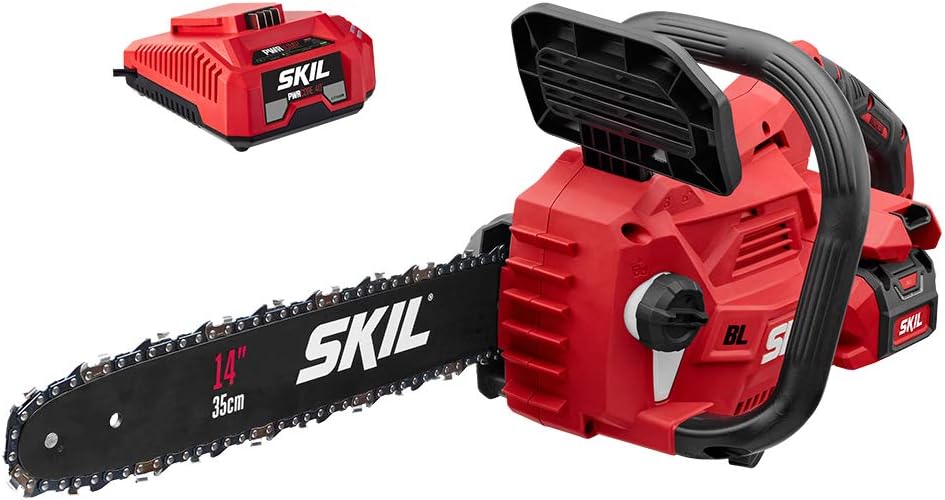 | SKIL PWR CORE 40 CS4555-10 Best complete starter kit | 14″ | SKIL PWR CORE 40 | ~11.5 lb | ~$199.99 full kit | Check Price |
1. Milwaukee M18 FUEL 16" Chainsaw (2727-21HD) — Best Overall
The 2727-21HD is the saw that made a lot of tree crews stop arguing about battery power. Its POWERSTATE brushless motor drives the 16-inch Oregon bar at up to 6,600 RPM, and Milwaukee positions it against a 40cc gas saw.
The HD kit ships with a 12.0Ah M18 REDLITHIUM HIGH OUTPUT pack — 216 watt-hours, which is a genuinely large battery by cordless outdoor standards.
Milwaukee claims up to 150 cuts per charge in 6×6 cedar. Independent testers cutting 6-inch oak reported roughly 100 cuts with charge still left on the gauge, which is a fair real-world translation.
The bar and chain are 3/8-inch low-profile, .043-inch gauge, 56 drive links — standard, cheap and available at any hardware store.
The catch is the price. At around $549 for the HD kit (or roughly $399 bare), it costs more than twice the SKIL. It only makes financial sense if you are already on M18 or you cut often enough that the runtime matters.
Pros
- Cuts like a 40cc gas saw, without the pull cord
- Huge 12.0Ah pack included in the HD kit
- Standard Oregon 3/8" LP bar and chain
- Runs on the same M18 packs as your other tools
Cons
- Easily the most expensive saw here
- Heavy once the 12.0Ah battery is on
- Amazon stock on the kit comes and goes
Already have a case of M18 packs? — this is the one saw here that turns an existing red battery collection into a genuine gas replacement, and it is worth the ~$549 kit price if you clear storm damage more than a weekend or two a year.
Check Price on Amazon →2. Greenworks 80V 16" Brushless Chainsaw — Most Power Per Dollar
Greenworks rates this 80V saw as a 45cc gas equivalent, and the numbers back the claim up better than most marketing does.
The brushless motor spins to 10,500 RPM for a chain speed of 10.5 m/s, on the same 16-inch low-kickback bar class as the Milwaukee.
Greenworks quotes up to 110 cuts through 4×4 pressure-treated lumber on a 2.0Ah pack, and up to 240 cuts on a 4.0Ah — so runtime scales straightforwardly with the battery you bolt on.
You also get hardware the cheaper saws skip: steel bucking spikes, a metal wrap-around handle, an electric chain brake and an oil-level window so you are not guessing at the reservoir.
The honest caveat is that $249.99 buys the bare tool. If you are not already in the Greenworks 80V system, add a battery and charger and it lands closer to the Milwaukee than the sticker suggests.
Pros
- 45cc-class output for bare-tool money
- Bucking spikes and metal wrap handle at this price
- Oil-level window and electric chain brake
- Battery feeds 75+ other Greenworks 80V tools
Cons
- $249.99 is tool-only — no battery, no charger
- 80V packs are expensive bought separately
- Fewer service centres than Milwaukee or Makita
Clearing more than an acre and want gas-class bite? — at $249.99 bare this is the cheapest route to 45cc-equivalent cutting on this page, provided you buy an 80V pack alongside it.
Check Price on Amazon →3. Makita XCU11Z 18V LXT 14" Chain Saw — Lightest, and Best for LXT Owners
The XCU11Z is the outlier here, and deliberately so. It is the only saw on the list that runs on a single 18V pack rather than a 36V, 40V, 56V or 80V platform.
That buys you weight. It is 7.9 lb bare and 9.3 lb with a battery fitted — light enough to hold at shoulder height while you limb a downed branch, which is not true of the Milwaukee.
Chain speed is 1,520 FPM on a 14-inch bar with 3/8-inch low-profile, .043-inch chain. That is slower than the 80V and 40V saws and you will feel it in thick hardwood.
Makita quotes up to 73 cuts in 4×4 cedar from one 18V LXT 4.0Ah battery, which is a realistic afternoon of pruning rather than a firewood session.
At $197.71 bare it is the cheapest way into a name-brand saw if you already own LXT batteries. If you do not, this is the wrong pick — buy the SKIL kit instead.
Pros
- Lightest saw here at 7.9 lb bare
- Runs on one standard 18V LXT pack
- Comfortable for overhead limbing
- Makita build quality and service network
Cons
- Slowest chain speed of the four
- 14" bar limits what you can fell
- Bare tool only — batteries add real cost
Already deep in Makita 18V LXT? — $197.71 and one of the packs off your charger gets you a 9.3 lb limbing saw you can actually hold up all afternoon.
Check Price on Amazon →4. SKIL PWR CORE 40 14" Chainsaw Kit (CS4555-10) — Best Complete Kit Under $200
This is the only saw here that arrives ready to cut. Around $199.99 at Ace Hardware and Tool Nut buys the saw, a 2.5Ah PWR CORE 40 battery and the Auto PWR Jump charger.
The brushless motor pushes chain speed up to 14.8 m/s — on paper the fastest chain on this page, though on a shorter 14-inch bar and a smaller battery than the 80V Greenworks.
SKIL includes tool-less chain tensioning via a side dial, auto-lubrication and an anti-kickback brake that cuts power the moment the bar tip catches.
The charger is the underrated part: it takes the pack from flat to 30% in about 15 minutes, which covers the gap while you stack what you just cut.
Where it gives ground is ecosystem. PWR CORE 40 is a much smaller tool range than M18 or LXT, so the battery has fewer other jobs to do.
Pros
- Battery and charger included for about $199.99
- Fastest quoted chain speed here at 14.8 m/s
- Tool-less tensioning and auto-lube
- 0–30% charge in roughly 15 minutes
Cons
- Small 2.5Ah pack limits a long session
- PWR CORE 40 ecosystem is comparatively thin
- 14" bar is not a felling setup
Buying your first chainsaw and not committed to a battery brand? — around $199.99 puts a brushless saw, a pack and a fast charger in the box with nothing else to buy.
Check Price on Amazon →How to Choose a Cordless Chainsaw
Start with the batteries you already own
This is the single biggest cost lever. A bare tool plus a new platform battery and charger routinely costs more than the saw itself.
If you own M18, buy Milwaukee. If you own LXT, buy the Makita. If you own neither, the SKIL kit is the cheapest honest entry point.
Match bar length to the job, not to ambition
A 14-inch bar handles limbs and small trunks comfortably. A 16-inch bar covers most storm-damage work a homeowner will meet.
Longer bars need more torque to avoid bogging, which is why the 16-inch saws here sit on 18V-plus-18V, 80V or high-output packs.
Watch runtime claims carefully
Manufacturer cut counts are usually measured in softwood — cedar or pressure-treated pine. Oak and other hardwoods cut that figure substantially.
Treat the published numbers as a ranking tool between saws, not a promise about your woodpile.
Do not skip the chain brake and bucking spikes
All four saws here have chain brakes. Bucking spikes are less universal, and they matter more than people expect — they let you pivot the bar into a cut instead of pushing the saw through it.
FAQ
Can a cordless chainsaw really replace a gas saw?
For homeowner work, yes. The Milwaukee and the Greenworks are both rated against 40–45cc gas saws, and both will get through storm cleanup and firewood on a large pack.
For all-day felling or milling, gas still wins on sustained runtime.
How many cuts should I expect on one charge?
Milwaukee quotes up to 150 cuts in 6×6 cedar with the 12.0Ah pack, Greenworks up to 240 cuts in 4×4 pressure-treated lumber on a 4.0Ah, and Makita up to 73 cuts in 4×4 cedar on an 18V 4.0Ah.
Those are different test materials, so compare them loosely rather than head to head.
Do I need to buy special bar oil?
Standard bar and chain oil works in all four. Every saw here has an auto-oiler, and the Greenworks adds a level window so you can see when it needs topping up.
Is a 14-inch bar enough?
For pruning, limbing and cutting fallen branches to firewood length, comfortably. For felling anything above roughly 12 inches in diameter you want the 16-inch saws.
The Verdict
If money is not the deciding factor and you already own M18 batteries, the Milwaukee 2727-21HD is the best saw here and it is not especially close.
If you are starting from nothing and want the most cutting power for the least money, the Greenworks 80V bare tool plus a 4.0Ah pack is the strongest value play.
The Makita XCU11Z earns its place on weight alone — but only for people already carrying LXT batteries.
And if this is your first chainsaw, the SKIL CS4555-10 kit is the sensible answer. About $199.99, nothing else to buy, and a brushless motor that will not embarrass itself in a woodpile.