Best Portable Table Saws of 2026: Jobsite Picks for Contractors and DIYers
A portable table saw is the tool that decides whether a deck, a set of cabinets or a room of flooring goes smoothly or turns into a weekend of frustration.
The good ones rip a sheet of plywood dead straight and fold down small enough to fit in a car.
The bad ones flex, drift out of square and leave burn marks on every cut.
We compared four of the most widely bought jobsite table saws of 2026 — two full-size 10-inch machines, one budget 10-inch, and one compact 8-1/4-inch — on rip capacity, fence quality, stand design, weight and price.
Quick Comparison
| Saw | Model | Best For | Key Specs | Price | |
|---|---|---|---|---|---|
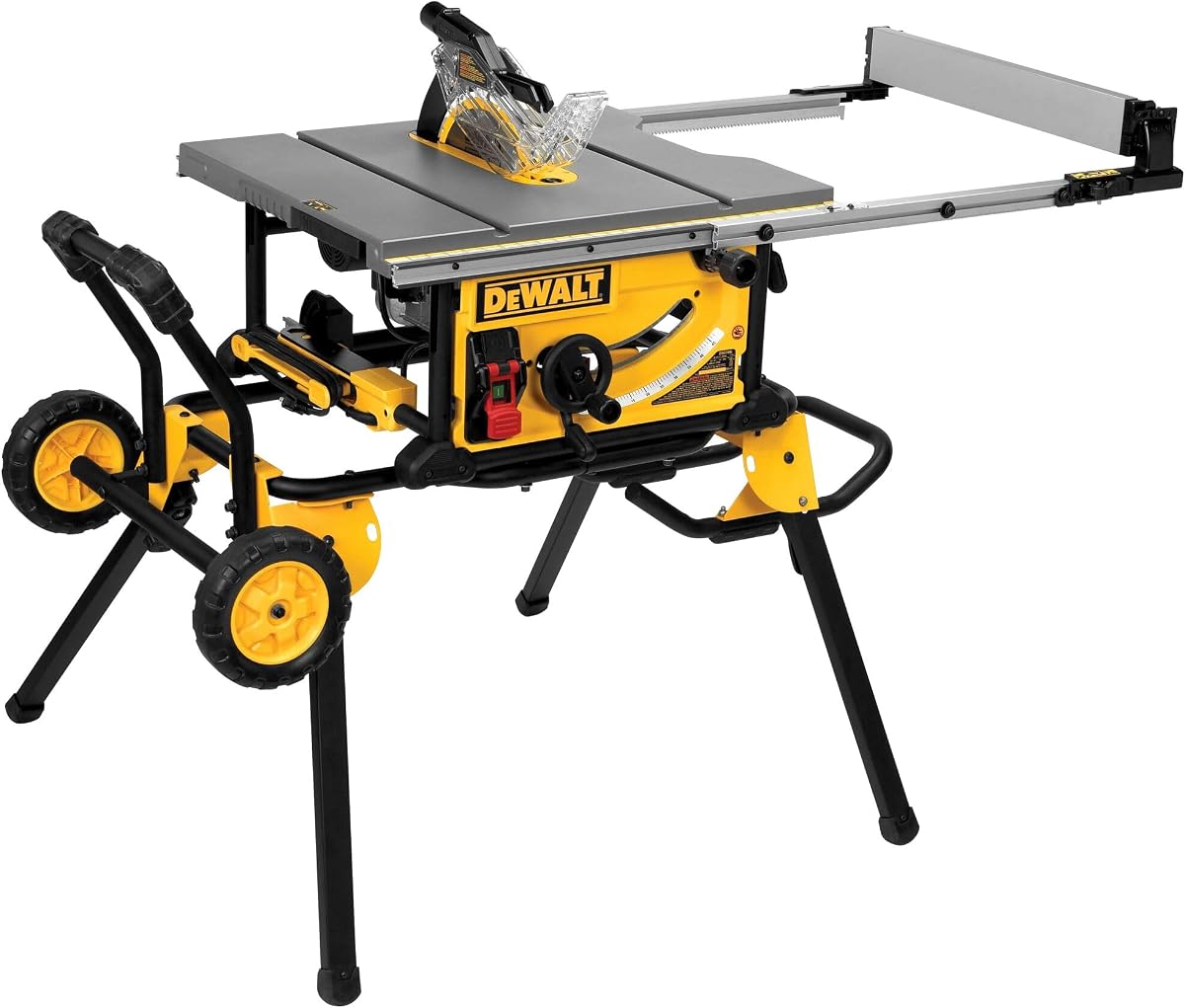 | DeWalt DWE7491RS | Best overall | 10" · 32-1/2" rip · 4,800 RPM · 90 lb | ~$579 | Check Price |
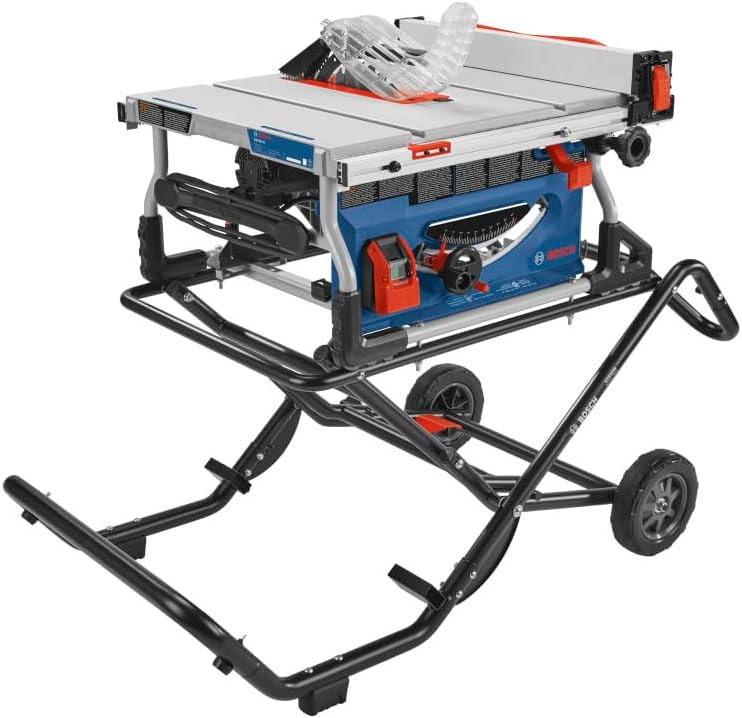 | Bosch GTS15-10 | Best stand & dust control | 10" · 32-1/8" rip · 3,800 RPM · 91 lb | ~$569 | Check Price |
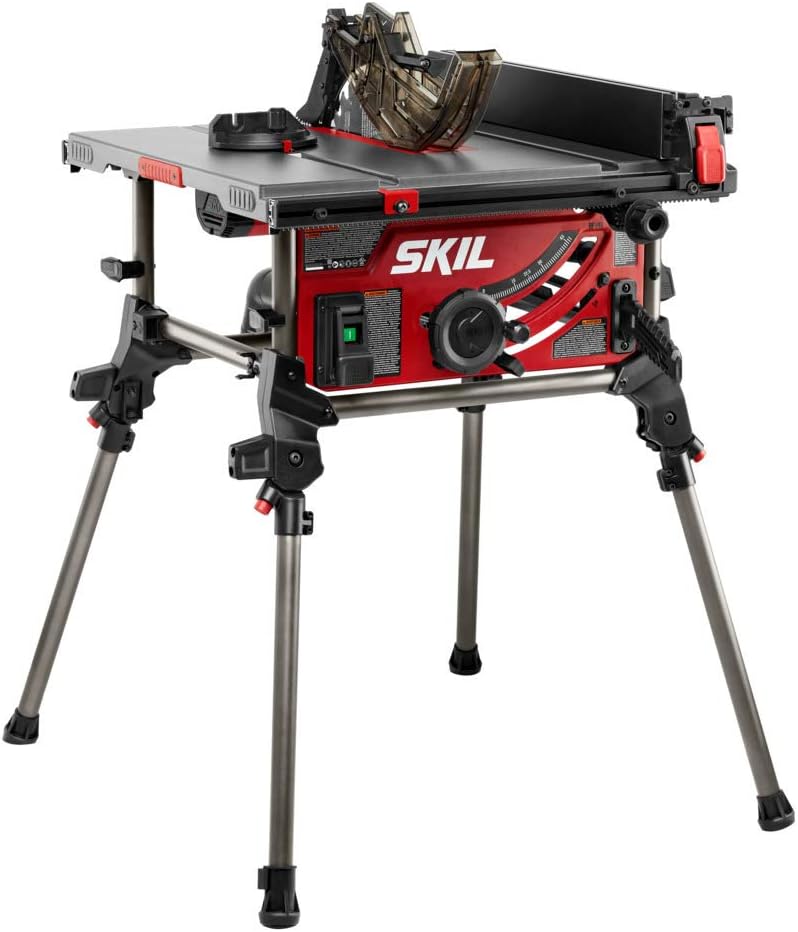 | SKIL TS6307-00 | Best value | 10" · 25-1/2" rip · 4,600 RPM · 67 lb | ~$279 | Check Price |
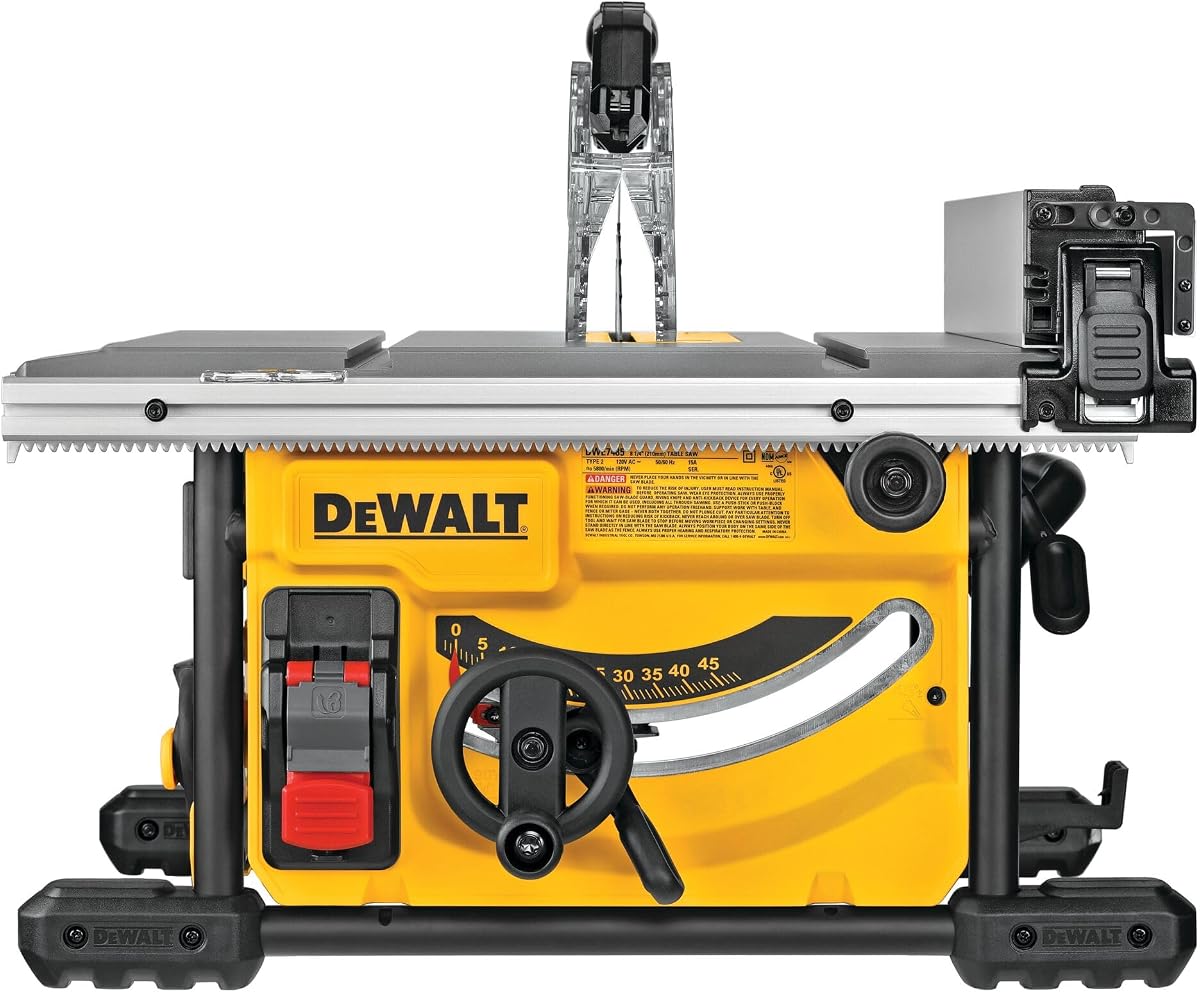 | DeWalt DWE7485 | Most portable | 8-1/4" · 24-1/2" rip · 5,800 RPM · 54 lb | ~$349 | Check Price |
1. DeWalt DWE7491RS — Best Overall Portable Table Saw
The DWE7491RS is the saw most finish carpenters end up owning, and the reason is the fence. The rack-and-pinion telescoping system moves smoothly and locks parallel to the blade without the fight you get from clamp-style fences.
Rip capacity is 32-1/2 inches to the right and 22 inches to the left, so a full sheet of plywood can be broken down without an outfeed trick.
The 15-amp motor spins at 4,800 RPM and cuts 3-1/8 inches deep at 90 degrees, which covers 4x material in one pass.
The rolling stand is the other half of the value. It folds flat, rolls on real wheels, and sets up in seconds — but the saw and stand together come to about 90 pounds, so this is a two-trip tool if you are working up a flight of stairs.
Pros
- Rack-and-pinion fence stays square and adjusts fast
- 32-1/2" rip handles full sheet goods
- Rolling stand folds flat and sets up in seconds
- Onboard storage for guard, riving knife, miter gauge and wrenches
Cons
- About 90 lb with the stand — awkward for one person on stairs
- The most expensive saw here
- Stock blade is fine for framing, not for finish cuts
If this saw is going to earn money, buy this one. At roughly $579 it is the safest pick for a carpenter who needs a fence that stays square all day.
Check Price on Amazon →2. Bosch GTS15-10 — Best Stand and Dust Control
Bosch fixed the biggest complaint about its previous jobsite saw by moving to a rack-and-pinion fence, and the GTS15-10 is a noticeably more accurate machine because of it.
Rip capacity is 32-1/8 inches right and 14-1/8 inches left, and depth of cut jumped to 3-9/16 inches — enough to put a 4×4 through in a single pass, which the DeWalt cannot quite do.
The motor turns 3,800 RPM, slower than the others on paper, but it holds speed through hardwood rips without the bog you might expect.
The real selling point is the GTA50W Gravity-Rise stand. Eight-inch treaded tires and a foot-release pedal mean you tip it, roll it and drop it into place, which matters more than any spec sheet line when you are moving between rooms.
Pros
- 3-9/16" depth of cut — 4x lumber in one pass
- Gravity-Rise stand with 8" tires is the easiest here to move
- Smart Guard System with three-position riving knife
- Rack-and-pinion fence adjusts quickly and stays parallel
Cons
- Only 14-1/8" of left-side rip capacity
- 3,800 RPM is the slowest no-load speed in this group
- Roughly 91 lb, and price sits near the DeWalt
Moving the saw a dozen times a day? The Gravity-Rise stand is worth the roughly $569 on its own — tip, roll, drop, cut.
Check Price on Amazon →3. SKIL TS6307-00 — Best Value 10-Inch Table Saw
At roughly $279 the SKIL undercuts the DeWalt and Bosch by about $300, and it does it without giving up the feature that matters most: it also has rack-and-pinion fence rails.
Rip capacity is 25-1/2 inches, which is short of a full sheet but still handles a 24-inch cabinet side, and the 15-amp motor runs at 4,600 RPM with a 3-1/2 inch depth of cut for 4×4 stock.
The legs fold into the saw rather than bolting to a separate stand, so there is one object to carry instead of two, and the whole thing weighs about 50 pounds.
You give up some fit and finish — the tabletop is smaller, the miter slots are less precise, and the stock blade should be replaced early — but for a homeowner building shelves and trimming doors, none of that is a dealbreaker.
Pros
- Around $279 — roughly half the price of the DeWalt
- Rack-and-pinion fence at a budget price point
- Integrated folding legs; about 50 lb, one-person carry
- 3-1/2" depth of cut still clears 4×4 stock
Cons
- 25-1/2" rip will not break down a full sheet in one pass
- Smaller table and less refined miter slots
- Stock 24-tooth blade is a framing blade, not a finish blade
Building a workshop on a homeowner budget? Around $279 buys a real rack-and-pinion fence — spend the savings on a 60-tooth blade.
Check Price on Amazon →4. DeWalt DWE7485 — Most Portable Compact Saw
The DWE7485 trades a 10-inch blade for an 8-1/4-inch one, and that single decision makes it the easiest saw here to live with in a small space.
It weighs about 54 pounds, has a metal roll cage base, and still gets the same rack-and-pinion fence as its bigger siblings, with 24-1/2 inches of rip capacity to the right.
The smaller blade spins faster — 5,800 RPM — which keeps cut quality high in plywood and trim, but depth of cut drops to about 2-1/2 inches at 90 degrees, so a 4×4 needs two passes.
There is no stand in the box at this price, so budget for one or plan to work off a bench. Blades are also less common in 8-1/4 inch than in 10 inch, though every major brand now makes them.
Pros
- About 54 lb — genuinely one-person portable
- Same rack-and-pinion fence as the pricier DeWalts
- 5,800 RPM gives clean cuts in plywood and trim
- Metal roll cage base and power-loss reset switch
Cons
- 2-1/2" depth of cut means two passes on 4×4
- Stand not included at the base price
- 8-1/4" blade selection is narrower than 10"
Short on van space or garage space? Roughly $349 gets a 54-pound saw you can lift alone and still trust for trim work.
Check Price on Amazon →How to Choose a Portable Table Saw
Fence quality beats motor power
Every saw here has a 15-amp motor, and the differences between them are small. The fence is where cut quality actually lives.
Rack-and-pinion rails — which all four of these have — keep the fence parallel to the blade as it moves. Older clamp-style fences require you to tap the back end square before every cut.
Match rip capacity to what you build
If you break down full sheets of plywood, you want 30 inches or more, which points at the DeWalt DWE7491RS or the Bosch.
If your work is trim, shelving and cabinet parts, 24 to 26 inches is plenty and saves both money and bench space.
The stand is part of the tool
A saw that is annoying to set up gets used less. Rolling and gravity-rise stands cost more but pay for themselves on any job where the saw moves.
Budget for a better blade
All four ship with a thin-kerf framing blade in the 24-tooth range. A 40- to 60-tooth blade costs $30 to $60 and improves cut quality more than any price jump between these saws.
Frequently Asked Questions
Is an 8-1/4-inch table saw big enough?
For plywood, trim, flooring and most furniture parts, yes. The limit is depth of cut — about 2-1/2 inches — so 4×4 posts and thick hardwood need two passes or a bigger saw.
Do I need a saw with a rolling stand?
Only if the saw moves. If it lives in one spot in a garage, a folding stand or a sturdy bench works just as well and saves you $150 or more.
Can these saws use a dado stack?
Most portable jobsite saws, including the ones here, have short arbors that will not accept a full dado stack. Check the manual before buying one — SKIL sells a separate dado insert plate for the TS6307.
How much rip capacity do I actually need?
Twenty-five inches covers most cabinet and shelving work. Thirty-plus inches is what you want if you regularly rip 4×8 sheets down the middle without a track saw.
The Verdict
For anyone whose saw has to pay for itself, the DeWalt DWE7491RS is still the reference portable table saw — the fence, the rip capacity and the rolling stand together justify the price.
The Bosch GTS15-10 is the pick if you move the saw constantly or need to cut 4x material in one pass; the Gravity-Rise stand is the best in the category.
The SKIL TS6307-00 is the value play, and it is not a compromise on the thing that matters most — the fence.
And if space or a solo carry is the constraint, the DeWalt DWE7485 gives up depth of cut and nothing else.