Best Cordless Brad Nailers for Finish Work in 2026: Top 4 Compared
Cordless brad nailers have transformed finish carpentry, freeing professionals and DIYers from the hassle of compressors, hoses, and gas cartridges. Whether you’re installing crown molding, attaching trim, or working on delicate woodworking projects, a good cordless brad nailer makes the job faster and cleaner.
But with so many options on the market, choosing the right one can be overwhelming. We’ve tested and compared four of the best cordless brad nailers available in 2026 to help you find the perfect match for your workshop and budget.
Quick Comparison
| Product | Best For | Price | Buy |
|---|---|---|---|
 DeWalt DCN680B DeWalt DCN680B |
Best Overall | ~$230 | Check Price |
 Milwaukee 2746-20 Milwaukee 2746-20 |
Best Ergonomics | ~$279 | Check Price |
 Makita XNB01Z Makita XNB01Z |
Cleanest Nail Holes | ~$339 | Check Price |
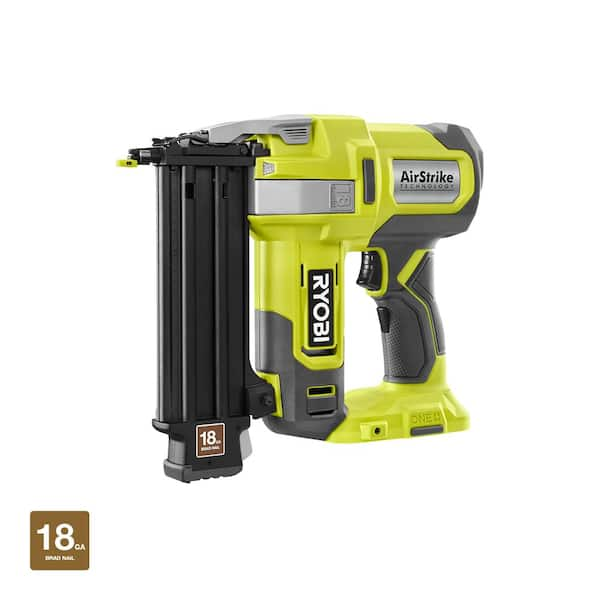 Ryobi P321 Ryobi P321 |
Best Budget Pick | ~$129 | Check Price |
DeWalt DCN680B: Best Overall Cordless Brad Nailer
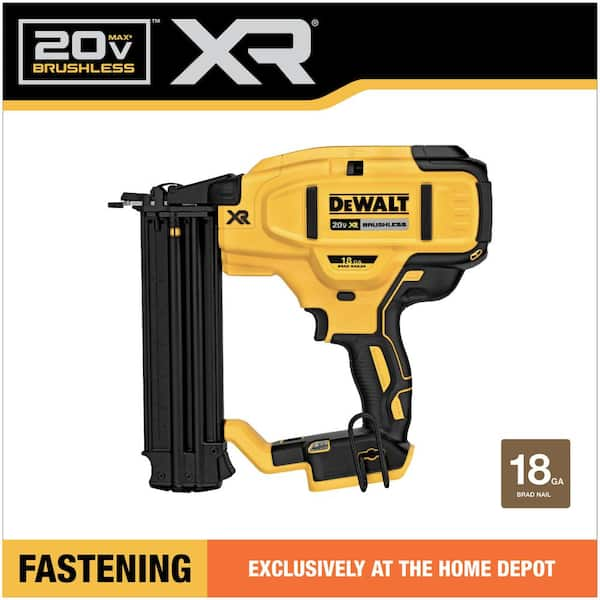
The DeWalt DCN680B 20V MAX XR is our top pick for good reason. Its brushless motor drives 18-gauge brad nails from 5/8-inch to 2-1/8 inches with impressive consistency in both hardwoods and softwoods. The tool-free depth adjustment dial gives you precise control over how deep each nail sits, and the micro-nose design improves visibility and accuracy when working on detailed trim.
At roughly 6.0 pounds (with battery), the DCN680B stays comfortable through long days of trim installation. The magazine holds 110 nails, reducing reload interruptions. It’s compatible with all DeWalt 20V MAX batteries, so if you’re already invested in the DeWalt ecosystem, adding this nailer is a no-brainer. Expect around 1,300 shots per charge with a 2.0Ah battery.
Milwaukee 2746-20: Best for Ergonomics and Precision
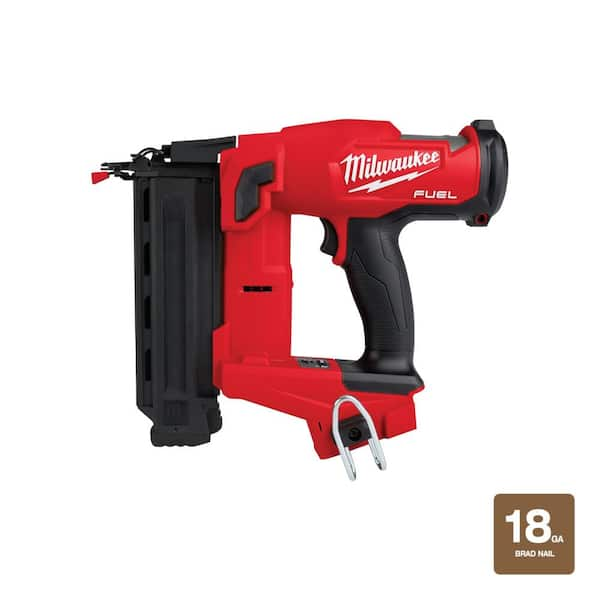
The Milwaukee M18 FUEL 2746-20 is a serious contender that edges out the competition in comfort and handling. Its compact Gen II design with a narrow profile makes it easier to maneuver in tight corners and overhead applications — areas where bulkier nailers become exhausting quickly.
Powered by Milwaukee’s POWERSTATE brushless motor and REDLINK PLUS intelligence, this nailer uses a sealed nitrogen air spring mechanism instead of gas cartridges. That means zero maintenance on the drive system and consistent firing power throughout the battery’s charge cycle. It drives 18-gauge brads from 5/8-inch to 2-1/8 inches and holds 110 nails. Depth adjustment is tool-free, and the dry-fire lockout protects your workpiece when the magazine runs low.
Makita XNB01Z: Cleanest Nail Holes in the Test
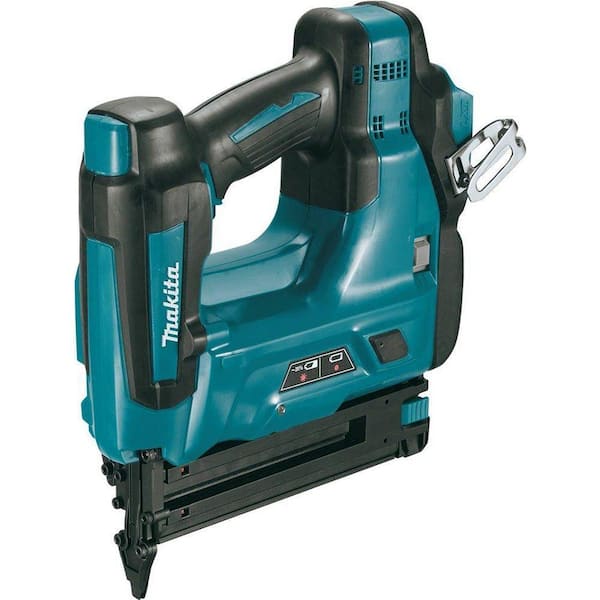
If the quality of the nail hole matters most to you — and for fine finish work, it absolutely should — the Makita XNB01Z 18V LXT stands out from the pack. In side-by-side testing, the Makita consistently produced the smallest, cleanest holes that required the least amount of wood filler to conceal.
The XNB01Z runs on Makita’s proven 18V LXT platform and features a 2-mode selector switch that lets you toggle between sequential and contact nailing. It drives 18-gauge brads from 5/8-inch to 2 inches (slightly shorter max length than DeWalt and Milwaukee). The magazine holds up to 100 nails, and on a 5.0Ah battery, you’ll get approximately 1,660 shots per charge — the highest in our roundup. At $339 for the bare tool, it’s the most expensive option, but working professionals who value flawless finish quality will appreciate the investment.
Ryobi P321: Best Budget Cordless Brad Nailer
Not everyone needs a $300+ professional nailer, and the Ryobi P321 ONE+ AirStrike proves that you can get reliable cordless nailing performance for significantly less money. At around $129 for the bare tool, it’s less than half the price of its professional-grade competitors.
The P321 uses Ryobi’s AirStrike technology to drive 18-gauge brads from 5/8-inch to 2 inches without a compressor. It’s 12% more compact than its predecessor (the P320) and delivers roughly 1,900 shots per charge — an impressive number that outpaces even the more expensive options. The tradeoff? Depth consistency isn’t quite as precise as DeWalt or Milwaukee on harder woods, and you may see occasional shallow drives in dense materials like oak. For softwood trim, MDF, and general DIY work, however, the Ryobi is more than capable.
Buying Guide: What to Look For in a Cordless Brad Nailer
Battery platform compatibility is the single most important factor for most buyers. If you already own a collection of DeWalt 20V MAX, Milwaukee M18, Makita 18V LXT, or Ryobi ONE+ tools, stick with that platform to share batteries and chargers. Buying into a new ecosystem just for a nailer rarely makes financial sense.
Nail length range matters depending on your typical projects. Most cordless brad nailers handle 5/8-inch to 2-inch brads, which covers the vast majority of trim work. The DeWalt and Milwaukee stretch to 2-1/8 inches, which gives a small advantage when nailing thicker stock or reaching through drywall into framing.
Depth adjustment should be tool-free — all four nailers in our comparison have this feature. Look for smooth, fine-grained control rather than preset detent positions. Dry-fire lockout prevents the nailer from firing when the magazine is empty, protecting your work surface from dents. A sequential/contact firing mode switch lets you choose between precision placement (sequential) and rapid production nailing (contact/bump fire).
Final Verdict
For most woodworkers and finish carpenters, the DeWalt DCN680B delivers the best combination of performance, reliability, and value. It sinks nails consistently, handles the widest brad length range, and feels solid in hand.
If ergonomics and tight-space access are your priority, the Milwaukee 2746-20 is worth the premium. For the absolute cleanest nail holes on fine finish projects, the Makita XNB01Z is the one to beat. And if you’re a homeowner or weekend DIYer who wants cordless convenience without spending a fortune, the Ryobi P321 at $129 is genuinely hard to beat for the money.