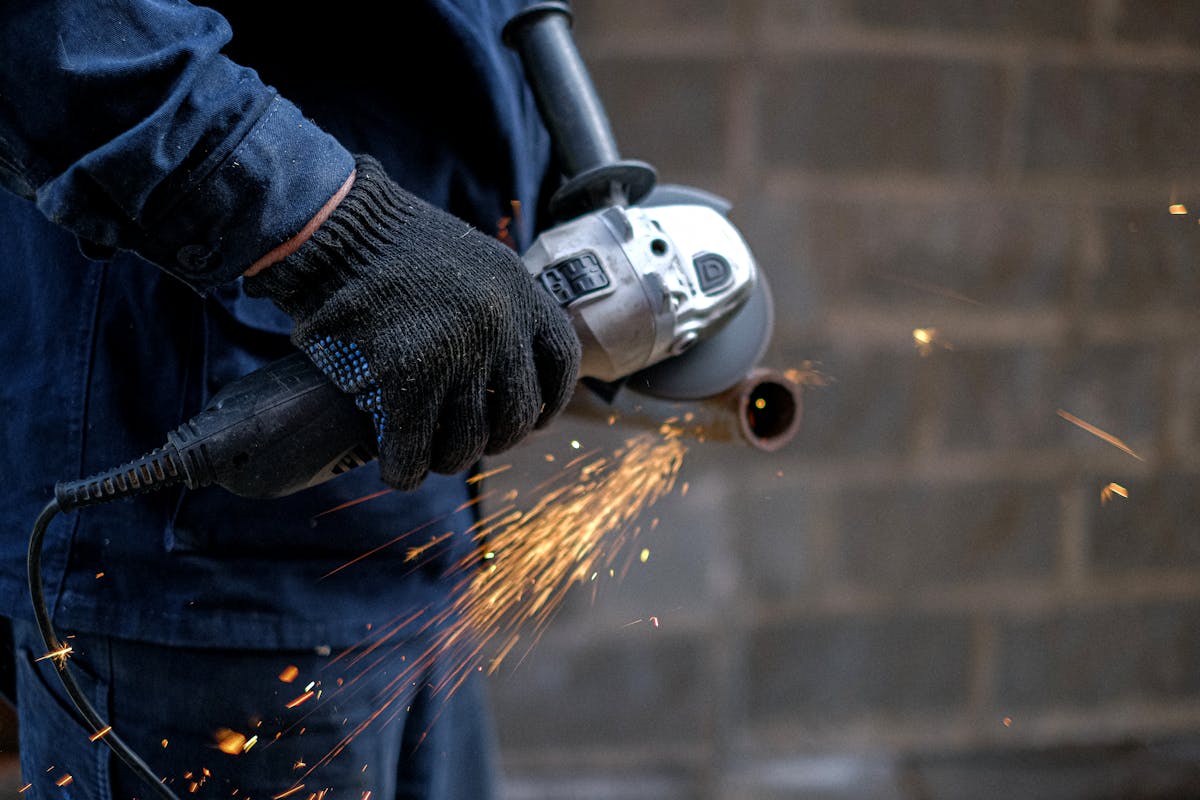
Best Corded Angle Grinders in 2026: DeWalt, Bosch, Makita & Ryobi Compared
An angle grinder might be the single most versatile tool in any workshop or garage. Whether you’re cutting rebar, grinding welds flush, removing rust, or sharpening blades, a reliable 4½-inch corded angle grinder earns its keep every single time. The challenge is choosing the right one — the market is crowded, and not every grinder that looks beefy actually performs when the work gets tough.
We tested and compared four of the best-selling corded angle grinders available at Home Depot in 2026: the DeWalt DWE4011, Bosch GWS8-45, Makita 9557PB, and Ryobi AG454. Each sits in a different price bracket and is built for a slightly different user. Here’s what separates them — and which one is worth your money.
Quick Comparison
| Product | Best For | Amps / RPM | Price | Buy |
|---|---|---|---|---|
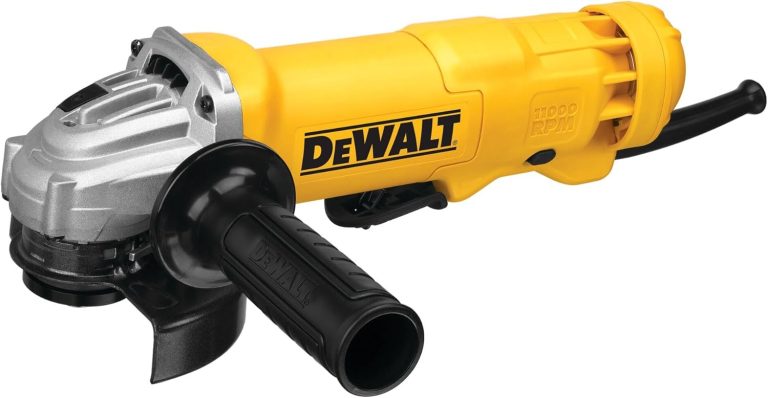
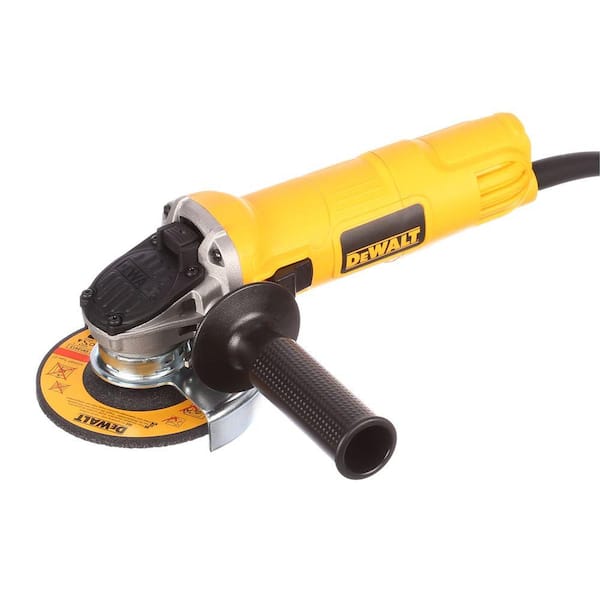 DeWalt DWE4011 DeWalt DWE4011 |
Best overall value | 7A / 12,000 RPM | $69 | Check Price |
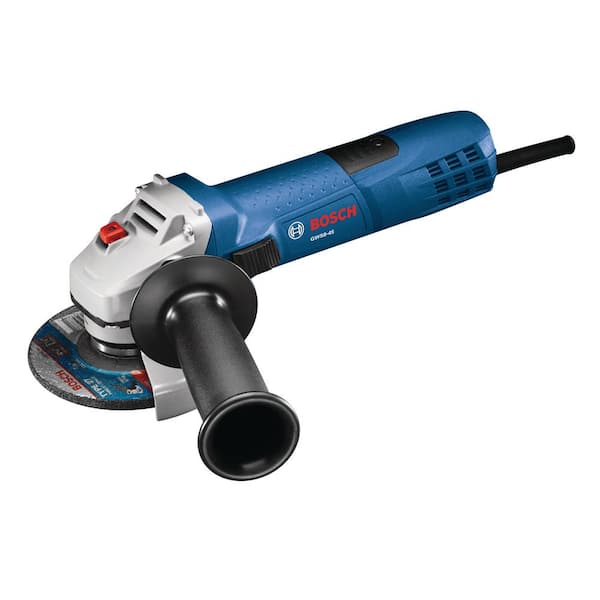 Bosch GWS8-45 Bosch GWS8-45 |
Best ergonomics | 7.5A / 11,000 RPM | $79 | Check Price |
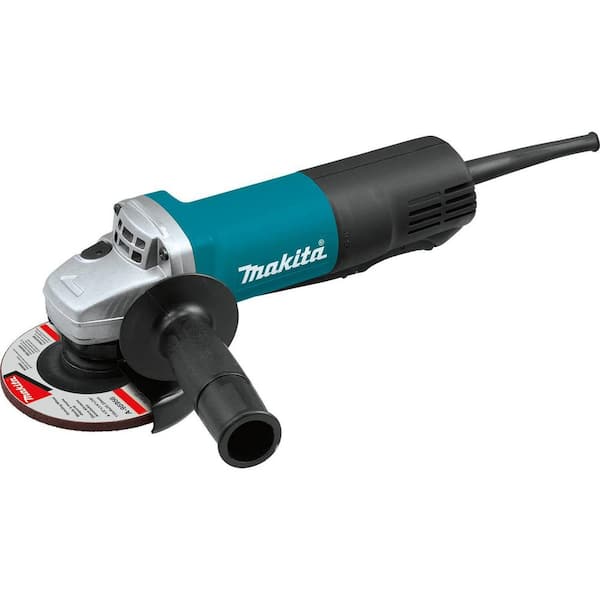 Makita 9557PB Makita 9557PB |
Best for pros | 7.5A / 11,000 RPM | $89 | Check Price |
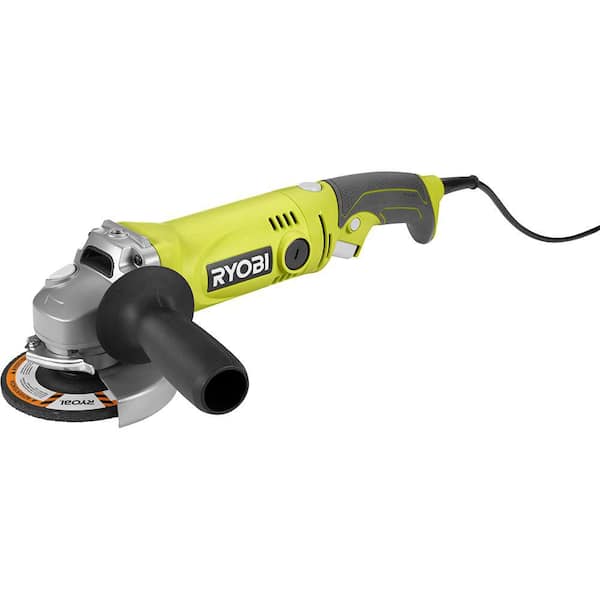 Ryobi AG454 Ryobi AG454 |
Best budget pick | 7.5A / 11,000 RPM | $59 | Check Price |
DeWalt DWE4011 — Best Overall Value
The DeWalt DWE4011 is the benchmark for 4½-inch corded grinders, and for good reason. Its 7-amp motor spins the disc at a blazing 12,000 RPM — the highest no-load speed on this list — which translates to faster material removal when cutting thin metal or grinding weld spatter. The One-Touch guard adjustment is a genuinely useful feature: you can reposition the safety guard with one hand in about two seconds, without fishing for a wrench. At 4.2 lbs, it’s lighter than both the Bosch and Makita, which matters a lot after 20 minutes of overhead grinding. The paddle switch on the DWE4011 shuts the tool off the instant you release it — a critical safety feature that the cheaper Ryobi doesn’t offer. For around $69, this is the one we’d grab first.
Bosch GWS8-45 — Best Ergonomics
Bosch built the GWS8-45 around user comfort, and it shows. The grip circumference is slimmer than most competitors, making it easier to maintain control during extended sessions. Its 7.5-amp motor delivers solid torque at 11,000 RPM, and the directed airflow system channels debris away from the motor internals — a thoughtful detail that extends motor life in dusty environments like concrete cutting or tile removal. The Service Minder brush system alerts you before the brushes wear out completely, which prevents catastrophic motor failure mid-project. The lock-on slide switch is convenient for long continuous runs, though we’d prefer a paddle switch for safety. At $79, the GWS8-45 represents excellent value for users who prioritize tool longevity and physical comfort over outright speed.
Makita 9557PB — Best for Professionals
If you grind metal for a living, the Makita 9557PB is the tool to reach for. Makita’s Labyrinth Construction seals the motor housing with a maze-like path that prevents dust and debris from ever reaching the armature — not just a filter, but an engineered barrier. The large paddle switch with lock-on/lock-off is intuitive and gives you both convenience and control depending on the task. At 7.5 amps and 11,000 RPM, the power output matches the Bosch, but the build quality and fit-and-finish feel a full notch above. The 9557PB also accepts both AC and DC power (useful on generators on job sites), which is a genuinely rare feature at this price point. Weighing in at 4.5 lbs and priced around $89, the Makita costs a bit more but justifies every dollar with durability and thoughtful engineering.
Ryobi AG454 — Best Budget Pick
The Ryobi AG454 has one trick the others don’t: its rear handle rotates 90 degrees left or right, letting you switch grip orientation for awkward angles without repositioning your whole body. That’s a clever ergonomic touch from a brand that usually competes purely on price. The 7.5-amp motor delivers the same no-load RPM as the Bosch and Makita, and the GripZone Technology on the handle does reduce fatigue somewhat. That said, the build quality is noticeably lighter — this is a homeowner tool, not a contractor tool. The lack of a dead-man paddle switch is the main safety caveat. If the tool gets knocked out of your hand while spinning, it won’t shut off automatically. For occasional weekend projects and light metalwork, though, the AG454 at around $59 is a genuinely capable grinder that won’t break the bank.
Buying Guide: What to Look For in a Corded Angle Grinder
Amperage matters more than RPM. Higher amps mean more sustained torque under load, which is where cheap grinders stall and premium ones keep cutting. A 7-amp motor will bog down grinding thick stock; a 7.5-amp motor handles it with ease.
Choose your switch type carefully. Paddle switches (dead-man style) shut off automatically when you release them — safer, but you can’t do sustained runs without keeping pressure on. Slide switches lock on for continuous use — convenient, but require discipline to use safely.
Guard adjustability is underrated. When you’re switching between cutting wheels and grinding wheels, or moving from horizontal to vertical work, being able to reposition the guard in seconds (versus fumbling with a wrench) saves real time and frustration.
Weight and balance: For overhead work or long sessions, even a half-pound difference in tool weight compounds into serious fatigue. DeWalt’s 4.2 lbs wins here; Makita’s 4.5 lbs is the heaviest of the group but still manageable.
Disc size vs. use case: All four tools here use 4½-inch discs, which handle the vast majority of metalworking, tile cutting, and surface prep tasks. If you’re regularly cutting 2-inch pipe or thick plate steel, a 5-inch or 7-inch grinder becomes worth the extra bulk.
Final Verdict
For most people, the DeWalt DWE4011 is the clear winner. It’s the lightest tool on the list, spins fastest, has the safest switch design, and costs $69. If you’re a professional who grinds daily and demands long-term durability, step up to the Makita 9557PB — the Labyrinth motor protection alone is worth the extra $20 over the long haul. The Bosch GWS8-45 splits the difference nicely for users who do a lot of extended grinding and value slim ergonomics. And if you’re on a tight budget for occasional DIY projects, the Ryobi AG454 handles the job without complaint. Just keep a firm grip on it.