Best Belt Sanders in 2026: Top Picks for Every Workshop
A belt sander is one of the most powerful material-removal tools in any woodworker’s arsenal. Whether you’re leveling a glue-up, refinishing a hardwood floor, or attacking rust on a metal surface, the right belt sander gets the job done fast. We tested and researched the top picks for 2026 across every budget to help you find the best belt sander for your shop.
Why Use a Belt Sander?
Belt sanders are the heavy lifters of the sanding world. While a random orbital sander is ideal for finishing and removing light scratches, a belt sander can remove significantly more material in far less time. A 3×21-inch belt running at 1,400 feet per minute will flatten a rough-sawn board, strip old paint, or blend a wide joint in minutes rather than hours.
The tradeoff is aggression. A belt sander demands respect — hold it in one spot too long and you’ll dig a groove into your workpiece. But once you get comfortable with the tool, it becomes indispensable for large flat surfaces, edge work, and any job where speed matters more than finesse. For final finish work, you’ll still want to follow up with a random orbital and fine grit sandpaper.
Quick Comparison
| Product | Best For | Price | Buy |
|---|---|---|---|
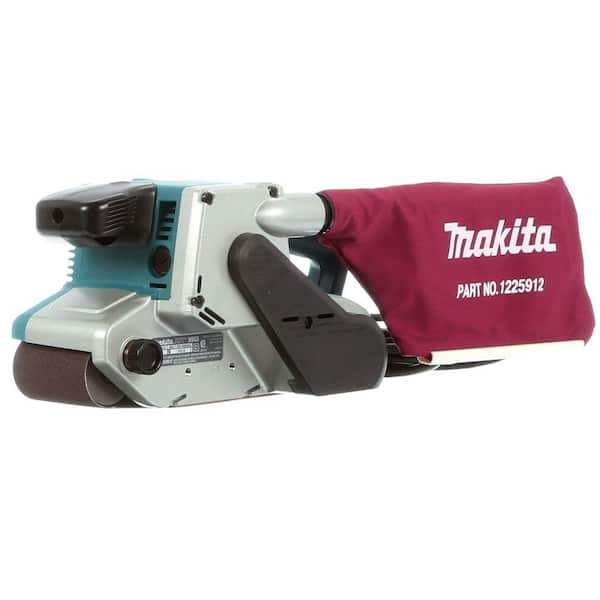 Makita 9903 Makita 9903 |
Best Overall | ~$109 | Check Price |
 DeWalt DCW220B DeWalt DCW220B |
Best Cordless | ~$199 | Check Price |
 Ridgid R27401 Ridgid R27401 |
Best Variable Speed | ~$99 | Check Price |
 WEN 6321 WEN 6321 |
Best Budget Pick | ~$60 | Check Price |
1. Makita 9903 — Best Overall Belt Sander
The Makita 9903 has earned its reputation as one of the most trusted belt sanders in woodworking shops and job sites across North America. The 8.8-amp motor spins 3×21-inch belts at up to 1,640 feet per minute, making quick work of stock removal and surface prep on hardwoods, softwoods, and even some metals.
What sets the 9903 apart from cheaper competitors is its variable speed dial — you can dial it down to 820 FPM for more controlled sanding near edges or on softer materials, then crank it back up for aggressive removal on big flat panels. The front handle and grip angle are comfortable for extended use, and the tracking adjustment keeps the belt centered without constant fuss. The included dust bag captures a solid amount of debris, though connecting a shop vac to the dust port dramatically improves collection. At around $109, the Makita 9903 is simply one of the best values in the category.
Key specs: 8.8 Amp, 3×21 in. belt, 820–1,640 FPM variable speed, 2-1/8 in. sanding capacity, 9.2 lbs.
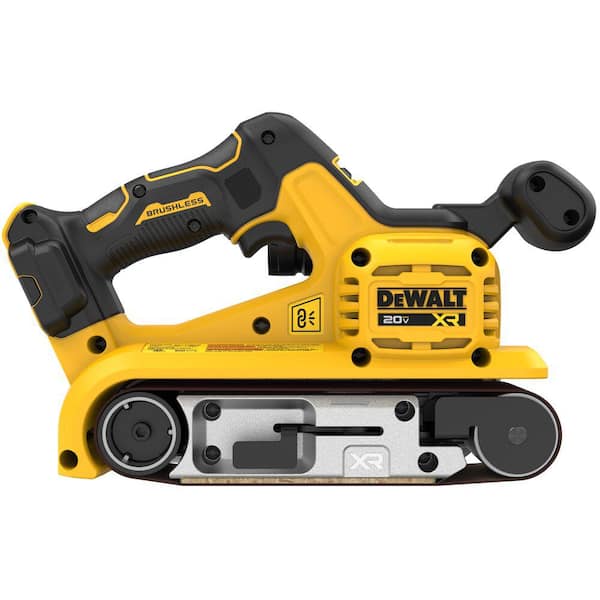
2. DeWalt DCW220B — Best Cordless Belt Sander
The DeWalt DCW220B brings genuine cordless freedom to the belt sander category without sacrificing real performance. Running on the ubiquitous 20V MAX battery platform, this brushless 3×21-inch sander delivers consistent belt speed under load — a critical feature that cheaper cordless sanders often fail to maintain when you push them into hardwood.
The variable speed dial gives you 10 speed settings, and the trigger-based speed control allows for intuitive adjustments mid-pass. DeWalt’s tool-free belt tracking and tension system makes swapping belts in the field fast and easy — no fumbling with wrenches when you need to change grit on the fly. The dust management system with a removable dust bag works well for light-duty collection, and the bag connects to any standard vacuum hose. At around $199 tool-only, it’s an investment, but for DeWalt users already on the 20V MAX platform, the added freedom of working without a cord is well worth it.
Key specs: 20V MAX XR brushless motor, 3×21 in. belt, variable speed, tool-free belt change, 7.0 lbs. (tool only).
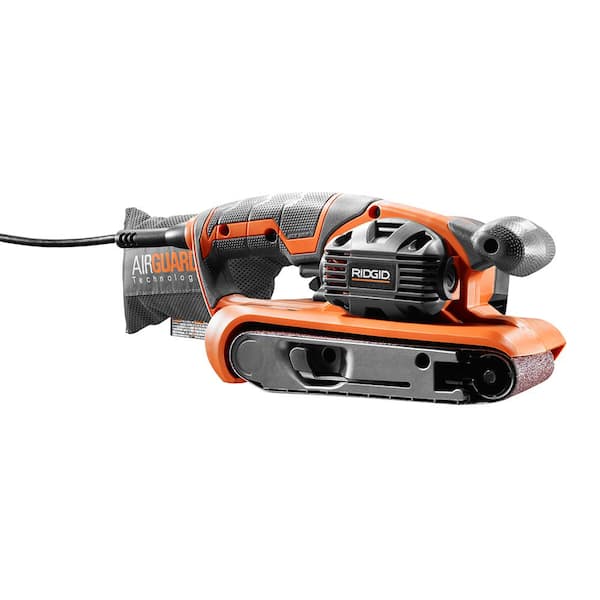
3. Ridgid R27401 — Best Variable Speed Belt Sander
The Ridgid R27401 is a Home Depot exclusive that consistently earns high marks for its variable speed system. The 6.5-amp motor uses electronic feedback to maintain a consistent belt speed even when the load increases — a feature you’d typically expect from a more expensive tool. That means the sander won’t bog down when you lean into a pass on a stubborn piece of reclaimed oak.
The AIRGUARD dust collection technology is a standout feature, capturing dust right at the point of contact for noticeably better air quality. The compact 3×18-inch belt platform makes this sander easier to maneuver in tighter spaces compared to the 3×21-inch alternatives. Tool-free belt release means you can swap abrasives without reaching for any tools, and the on-board wrench storage is a practical touch. Ridgid’s lifetime service agreement (when registered at Home Depot) adds long-term value that’s hard to argue with. Expect to pay around $99 at Home Depot.
Key specs: 6.5 Amp, 3×18 in. belt, variable speed with electronic feedback, AIRGUARD dust collection, tool-free belt release, 5.5 lbs.
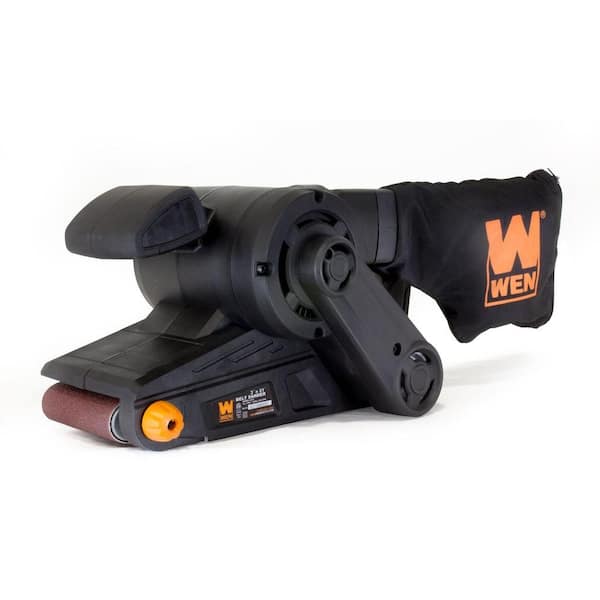
4. WEN 6321 — Best Budget Belt Sander
If you want a capable belt sander without spending over $100, the WEN 6321 is the answer. The 7-amp motor pushes 3×21-inch belts at a fixed 1,475 FPM — fast enough to make real progress on most wood-removal tasks. It’s not variable speed, but for hobbyists and weekend woodworkers, that single speed handles the vast majority of jobs.
WEN has done a good job of hitting the essentials: a dust bag for chip collection, easy belt tracking adjustment, and a front grip that makes two-handed control comfortable. The tool weighs just 6 lbs, making it less fatiguing than some heavier corded competitors. Belt changes take a moment to learn but become second nature quickly. For around $60, the WEN 6321 is a solid entry point for anyone who wants belt sander performance without the premium price tag.
Key specs: 7 Amp, 3×21 in. belt, 1,475 FPM (fixed speed), dust bag included, 6.0 lbs.
Buying Guide: What to Look For in a Belt Sander
Belt size is the first spec to consider. Portable belt sanders typically come in 3×18-inch or 3×21-inch configurations. Wider, longer belts cover more surface area per pass and generally remove material faster. The 3×21-inch format is the most common and offers the widest selection of replacement belts at hardware stores.
Motor amperage determines how hard the sander can work before it bogs down. For hardwoods and aggressive removal, look for at least 7 amps. The Makita 9903 at 8.8 amps and the DeWalt cordless brushless motor represent the higher end of portable belt sander power, while 6–7 amp motors (Ridgid, WEN) are perfectly capable for most workshop tasks.
Variable speed is worth paying a little extra for. Being able to slow the belt down lets you work near delicate edges, use the sander on metal, or ease into a pass without immediately digging in. Fixed-speed sanders at 1,400–1,500 FPM do a great job on flat surfaces but offer less versatility.
Dust collection matters more than most beginners realize. A belt sander produces enormous amounts of fine dust, and breathing it is a real health hazard. All four of our picks include dust bags, but adding a shop vac to any of them transforms dust management. Look for models with built-in vacuum ports for the best results.
Belt tracking and tensioning should be tool-free whenever possible. A well-designed tracking system keeps the belt centered on the platen without constant adjustments. Poor tracking causes premature belt wear and frustrating work stoppages.
Final Verdict
For most woodworkers, the Makita 9903 is the best all-around belt sander you can buy in 2026. Its 8.8-amp variable speed motor, comfortable ergonomics, and proven reliability make it the go-to choice for serious hobbyists and professionals alike. DeWalt users who want to stay cord-free should consider the DCW220B — the brushless motor and 20V MAX platform compatibility make it a compelling choice despite the premium price. For budget buyers, the WEN 6321 delivers everything you need for occasional heavy sanding without breaking the bank.