Best Budget Miter Saws for 2026: Top 4 Picks for Every DIYer
A miter saw is one of the most transformative tools you can add to your workshop. Whether you’re cutting trim, framing a deck, or building furniture, the right miter saw makes every cut cleaner, faster, and safer than anything you could do with a circular saw or hand tool. The challenge? Finding a model that delivers real performance without draining your wallet.
We tested and researched the top miter saws in the $200–$350 range for 2026 — the sweet spot where quality and value meet. These four saws stood out from the pack. Each one offers something different, from ultra-affordable entry-level cutting to near-professional precision.
Quick Comparison: Best Budget Miter Saws 2026
| Product | Best For | Price | Buy |
|---|---|---|---|
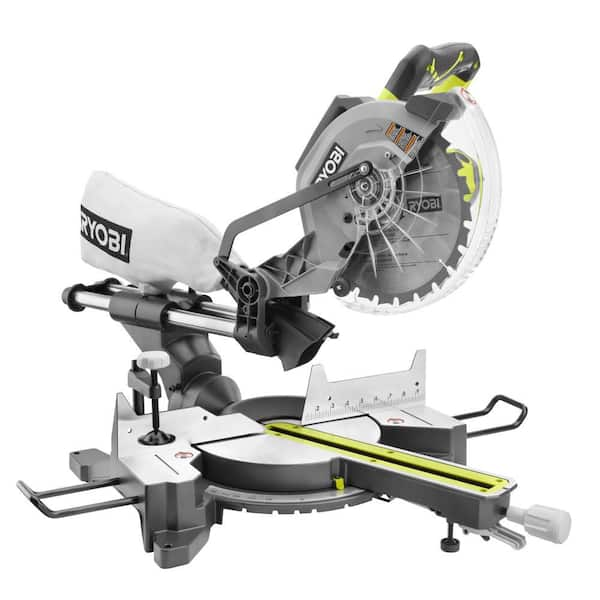 RYOBI TSS102L RYOBI TSS102L |
Best for Beginners | ~$199 | Check Price |
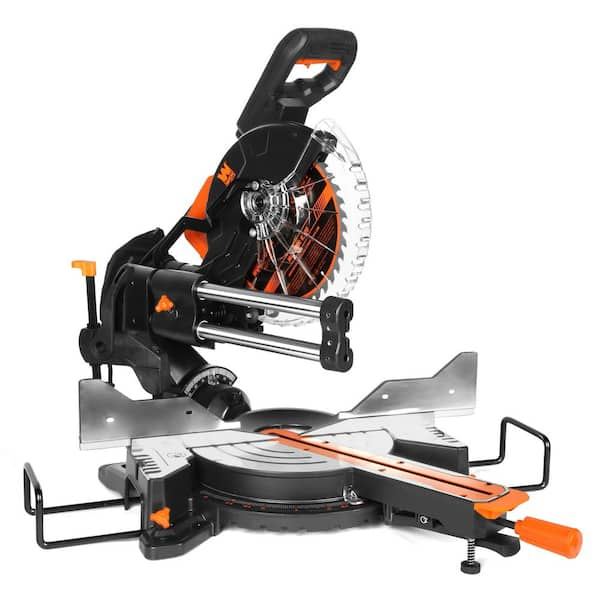 WEN MM1015 WEN MM1015 |
Best Bang for Buck | ~$243 | Check Price |
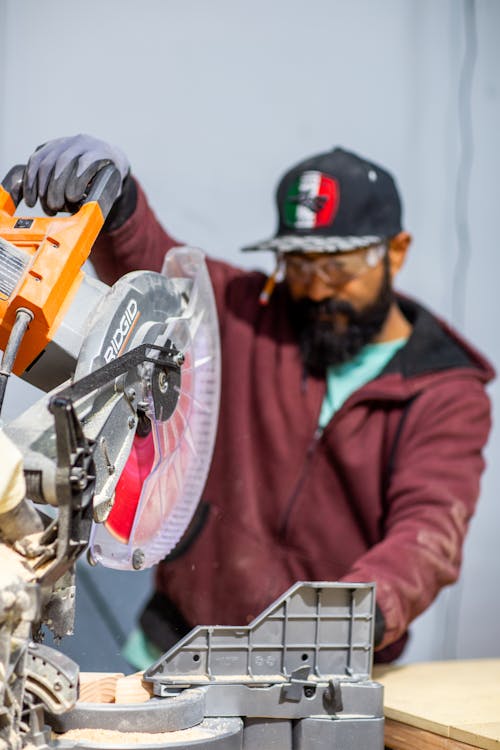
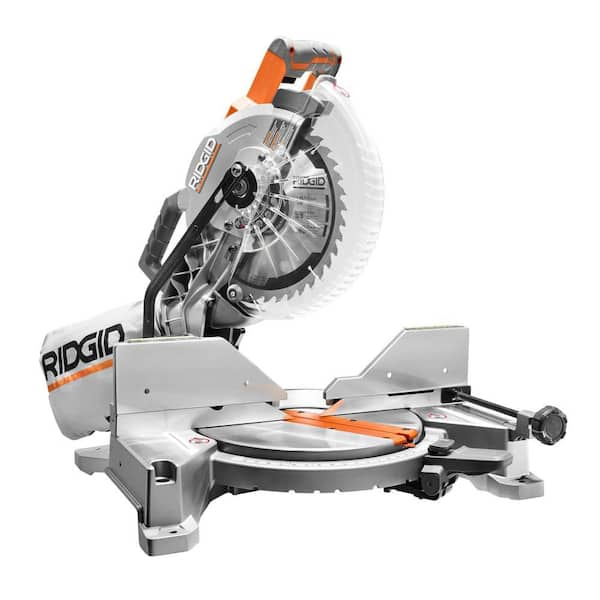 RIDGID R4113 RIDGID R4113 |
Best Lifetime Warranty | ~$259 | Check Price |
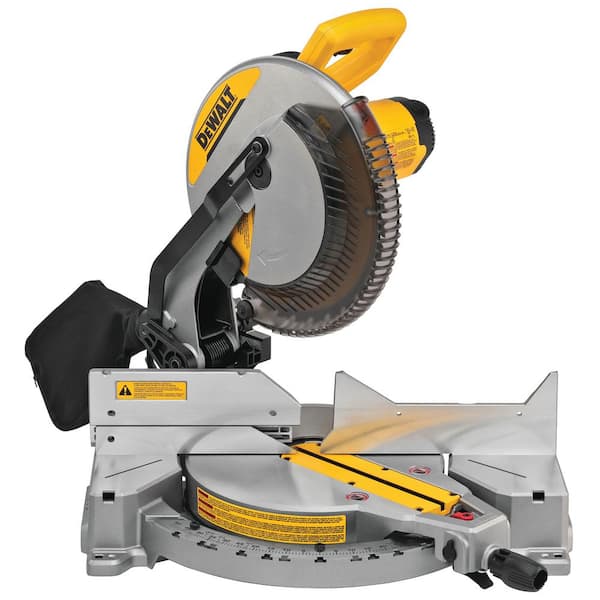 DeWalt DWS715 DeWalt DWS715 |
Best for Serious DIYers | ~$329 | Check Price |
1. RYOBI TSS102L — Best Miter Saw for Beginners
If you’re just getting started with power tools, the RYOBI TSS102L 10-inch Sliding Compound Miter Saw is hard to beat at around $199. It’s a full sliding saw, which means the blade travels along rails to extend your crosscut capacity — you can cut boards up to 12 inches wide. That’s a huge advantage at this price point, where many competitors only offer basic compound (non-sliding) models.
The 15-amp motor hits 4,600 RPM and handles dimensional lumber without hesitation. The built-in laser guide is a genuine feature — not just a gimmick — and helps newer users line up cuts accurately before pulling the trigger. Bevel cuts go up to 45° left, and miter angles reach 50° left and 60° right, covering virtually every trim and framing scenario a DIYer will encounter.
The TSS102L ships with table extensions, a work clamp, dust bag, and blade wrench — everything you need to get cutting out of the box. Build quality is sturdy green Ryobi plastic, which isn’t glamorous but holds up well in a home shop. The 3-year manufacturer’s warranty adds peace of mind. Bottom line: it delivers sliding compound performance at a price that won’t cause sticker shock.
2. WEN MM1015 — Best Bang for Your Buck
The WEN MM1015 15-Amp 10-Inch Dual Bevel Sliding Compound Miter Saw is the feature-for-feature value champion in the budget segment. At around $243, you get a dual bevel saw — meaning it tilts both left AND right — which is a feature you’d typically pay $400+ for on a name-brand model. Combine that with sliding rails, an LED cutline indicator, and a powerful 5,000 RPM motor, and this saw is almost comically well-equipped for the price.
The dual bevel capability is genuinely useful for crown molding, picture frames, and anything requiring a compound angle in both directions without flipping the workpiece. The LED cutline casts a shadow precisely where the blade will cut — no laser calibration headaches, and it works in bright light. Miter range extends to 49° in both directions, and the saw handles boards up to 12 inches wide and 3.75 inches thick.
WEN is a Chicago-based tool brand with solid customer service and 2-year warranty coverage. It’s not DeWalt or Ridgid in terms of brand recognition, but it punches well above its price class. For a homeowner doing remodeling projects, flooring installation, or deck work, the MM1015 offers a genuinely impressive package.
3. RIDGID R4113 — Best Value with a Lifetime Warranty
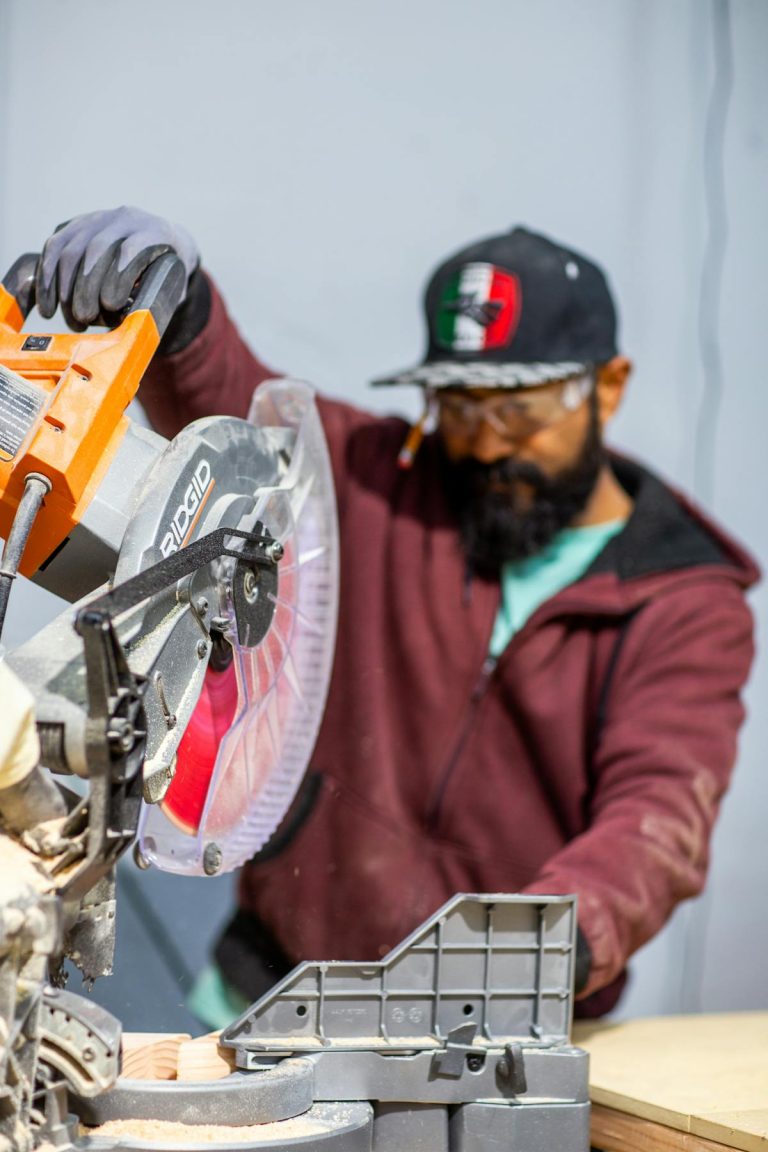
The RIDGID R4113 15-Amp 10-Inch Dual Bevel Miter Saw occupies a sweet spot between budget and professional. At around $259, it’s not the cheapest option here, but it comes backed by RIDGID’s legendary Lifetime Service Agreement — a warranty that covers parts, service, and replacement for the life of the original purchaser. No other brand in this price range comes close to that coverage.
The R4113 features a 15-amp, 5,000 RPM motor and a dual bevel design that tilts 45° in both directions. The LED cutline indicator is bright and accurate, projecting a shadow line directly where the blade cuts. At 70° of miter range (beyond the standard 50° most saws offer), you have more flexibility for unusual angles in trim and furniture work. The build quality feels solid and professional, with less plastic flex than you’d expect at this price.
RIDGID is sold exclusively through Home Depot, which makes service and parts easy to access. The lifetime warranty essentially means this is the last 10-inch miter saw you’ll ever need to buy — a compelling argument even at a slight premium over the competition.
4. DeWalt DWS715 — Best for Serious DIYers and Light Pros
At around $329, the DeWalt DWS715 12-Inch Single Bevel Compound Miter Saw is the priciest option on this list — but it earns every dollar. This saw’s 15-amp motor delivers 4,000 RPM with the kind of torque that laughs at dense hardwoods and thick stock. The 12-inch blade gives you larger cutting capacity than any 10-inch saw: up to 8 inches of vertical cutting height, which matters when you’re cutting crown molding or thick beams.
The DWS715 uses DeWalt’s stainless-steel miter detent plate with 11 positive stops for repeatable, click-in accuracy on common angles. The tall sliding fences support crown molding up to 6-3/4 inches nested and base molding up to 6-1/2 inches. Weight comes in at 52 lbs — not a lightweight, but manageable for a 12-inch saw. DeWalt’s 3-year warranty and nationwide service network provide solid backup.
Where the DWS715 falls short is bevel flexibility — it’s single bevel only, tilting left to 48°. If you need dual bevel for crown molding work, you’d want to step up to the DWS716. But for straight crosscuts, basic compound angles, and all-purpose workshop use, this is a powerhouse that will outlast casual weekend warriors and handle light contractor work without breaking a sweat.
Buying Guide: What to Look For in a Budget Miter Saw
Shopping for a miter saw in 2026 means navigating a range of specs that all sound important but matter very differently depending on your work. Here’s what actually moves the needle:
Blade size — 10-inch vs. 12-inch: A 10-inch saw is lighter, cheaper, and handles 99% of trim and flooring work. A 12-inch blade extends your cutting capacity for larger stock and crown molding. Most homeowners don’t need 12 inches, but if you’re doing large-scale framing or working with thick lumber, it’s worth the extra cost.
Single vs. dual bevel: A single-bevel saw tilts in one direction (usually left). Dual bevel tilts both ways, which is a genuine timesaver when working with crown molding or any compound angle work — you flip the saw instead of re-positioning the workpiece. If you’ll ever cut crown molding, pay the extra $50–80 for dual bevel. It’s worth it.
Sliding vs. non-sliding: A sliding compound miter saw extends its cutting width dramatically — a 10-inch sliding saw can crosscut boards up to 12–13 inches wide, while a non-sliding model maxes out around 6–8 inches. Unless you’re only cutting door casings and narrow trim, sliding capability is a must.
Motor and RPM: Look for at least 12 amps and 4,500 RPM for general use. A 15-amp motor ensures you won’t bog down in thick hardwoods or engineered lumber. All four saws on this list meet that standard.
Dust collection: Miter saws throw sawdust everywhere. A built-in dust port connected to a shop vac or dust bag makes a real difference in visibility and cleanup time. Check the port size matches your vacuum hose before buying.
Final Verdict
For most homeowners and weekend DIYers, the RYOBI TSS102L delivers the best entry point — a sliding compound saw with a laser for under $200, backed by a solid warranty. Step up to the WEN MM1015 if you want dual bevel capability on a tighter budget. The RIDGID R4113 is the smartest long-term buy if you value warranty coverage above all else. And if you’re ready to invest in a workhorse that won’t let you down, the DeWalt DWS715 is the step up to professional-grade precision. No matter your budget, there’s a miter saw on this list that will make every cut cleaner and every project more satisfying.