Best Random Orbital Sanders for Woodworking in 2026
A good random orbital sander is one of the most versatile tools in any woodworker’s shop. Whether you’re smoothing rough-cut lumber, feathering body filler on a project car, or prepping a tabletop for a fine finish, the right sander makes a measurable difference in both speed and surface quality. The random orbit motion — combining rotation with an elliptical orbit — eliminates the directional scratch marks that plague belt sanders and standard palm sanders, leaving you with a cleaner surface that takes stain and topcoat evenly.
We’ve researched and compared the top-rated random orbital sanders available in 2026, focusing on corded 5-inch models — the most popular size for general woodworking. Here are four that consistently stand out across power, ergonomics, dust collection, and value.
Quick Comparison: Best Random Orbital Sanders 2026
| Product | Best For | Power | Price | Buy |
|---|---|---|---|---|
 DeWalt DWE6423 DeWalt DWE6423 |
Best Overall | 3A / 12,000 OPM | ~$79 | Check Price |
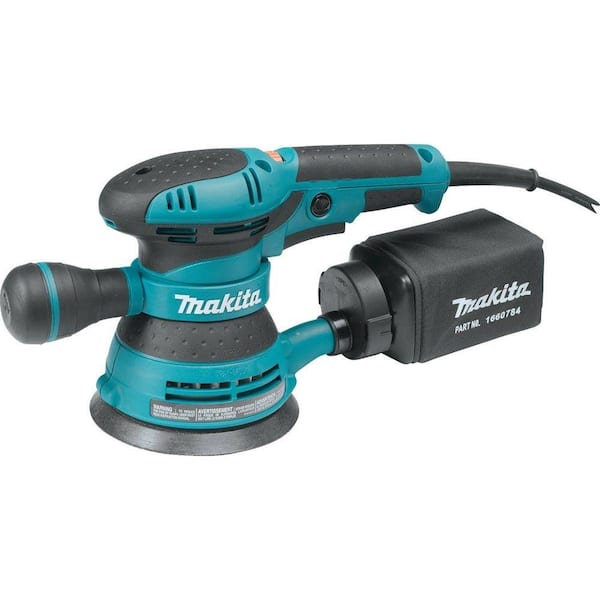 Makita BO5041 Makita BO5041 |
Best Premium / Low Vibration | 3A / 12,000 OPM | ~$129 | Check Price |
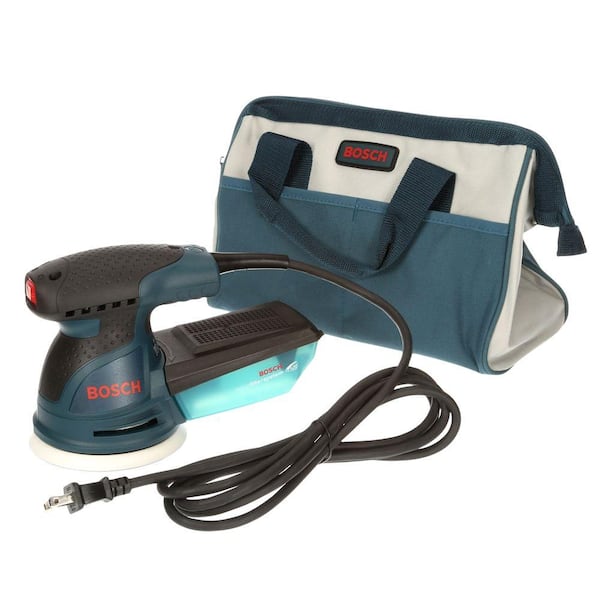 Bosch ROS20VSC Bosch ROS20VSC |
Best Finish Quality | 2.5A / 12,000 OPM | ~$85 | Check Price |
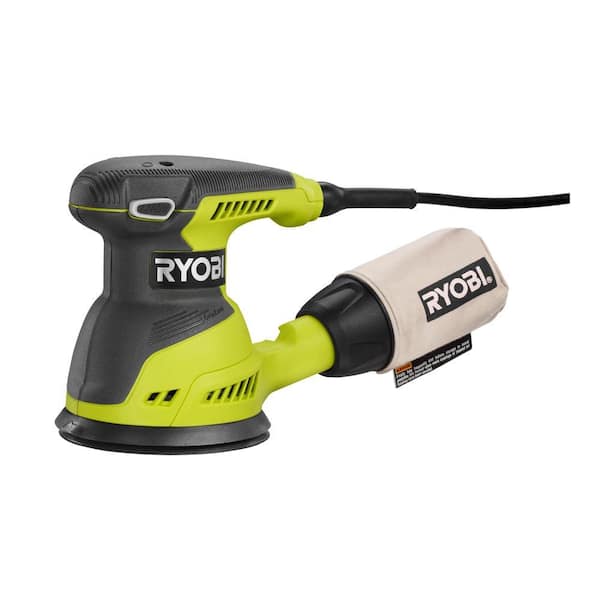 Ryobi RS290G Ryobi RS290G |
Best Budget Pick | 2.6A / 12,500 OPM | ~$59 | Check Price |
1. DeWalt DWE6423 — Best Overall Random Orbital Sander
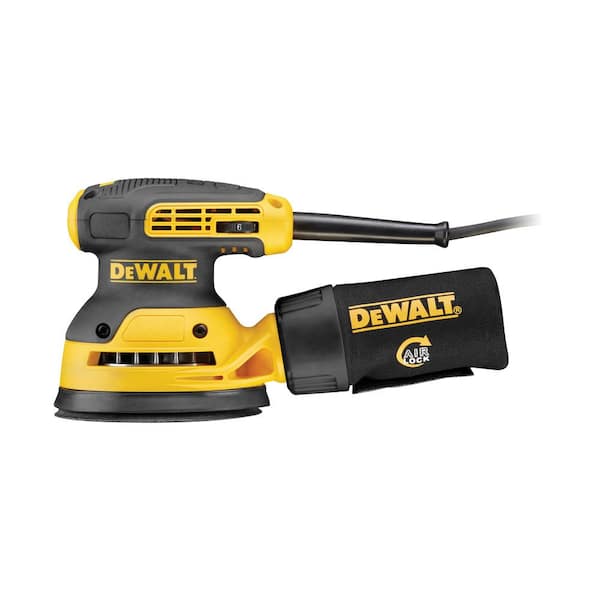
The DeWalt DWE6423 is the sander most woodworkers reach for first — and for good reason. Its 3-amp motor delivers a variable speed range of 8,000 to 12,000 OPM, giving you enough control to dial back aggression on delicate veneers while still removing material quickly in rough-sanding mode. The separate counterweight system keeps vibration genuinely low for this price range, which matters on long sanding sessions.
The compact, low-profile body design lets you sand closer to edges and into corners without the motor housing getting in the way. Dust collection runs through a one-handed locking bag that snaps on and off without tools — it captures around 75–80% of sanding dust in typical use. Hook-and-loop pad changes are fast, and 5-inch abrasives are available everywhere. At ~$79, the DWE6423 delivers professional-level performance without the professional price tag.
2. Makita BO5041 — Best Premium Pick for Low Vibration
If you spend serious time at the bench, the Makita BO5041 is worth every extra dollar. Makita’s engineers are obsessive about vibration control, and it shows — the BO5041’s counterbalance mechanism is tuned more precisely than the competition, which translates to noticeably less hand fatigue over a two-hour sanding session. The variable speed dial runs from 4,000 to 12,000 OPM, giving a wider low-speed range that’s ideal for fine finishing work on stained surfaces or soft woods.
The D-handle grip design is a standout feature: it provides a third contact point between your palm and the tool, improving control and reducing the tendency to drift on large flat panels. The built-in vacuum port accepts a standard shop vac hose for near-zero dust sanding — a huge advantage when working indoors. Makita backs this sander with a 3-year warranty. At ~$129, it’s a significant step up, but professional finish carpenters and serious hobbyists consistently rate it among the best sanders they’ve owned.
3. Bosch ROS20VSC — Best for Ultra-Smooth Finish Quality
The Bosch ROS20VSC earns its reputation among furniture makers and cabinet finishers for one core reason: it produces exceptionally swirl-free results. The secret is Bosch’s integrated pad dampening and braking system — when you lift the sander off the workpiece, the pad slows immediately rather than spinning freely, which prevents the swirl marks that slower-stopping sanders leave behind. Variable speed runs from 7,500 to 12,000 OPM.
The soft microcellular foam backing pad conforms slightly to curved or contoured surfaces, maintaining consistent abrasive contact across the whole pad. This makes it particularly effective on tabletops with subtle relief carving, or furniture pieces that aren’t perfectly flat. The kit includes a carrying bag and a micro-filter dust canister that attaches to the sander body and delivers solid onboard dust capture. At ~$85, it sits right between the DeWalt and the Makita in price, and it earns its spot with superior finishing performance.
4. Ryobi RS290G — Best Budget Random Orbital Sander
Not everyone needs a premium tool for weekend projects, and the Ryobi RS290G proves that budget doesn’t have to mean bad. Its 2.6-amp motor spins at a fixed 12,500 OPM — faster than most variable-speed models at their top setting — which makes it an efficient material remover for paint stripping, rough sanding, and general surface prep. It ships with three sanding sheets and a dust bag, so you’re ready to work straight out of the box.
The trade-off versus the pricier options is the lack of variable speed. Fixed-speed sanders can be harder to control on very soft woods or delicate veneers, so this is best suited to intermediate and rough-sanding tasks rather than fine finishing. That said, for sanding decks, painting prep, and general workshop use, the RS290G holds its own against tools costing twice as much. At ~$59, it’s the easiest entry point into random orbital sanding and a solid choice for anyone just building their tool collection.
Buying Guide: What to Look For in a Random Orbital Sander
Motor power and OPM range. Most 5-inch corded random orbitals run between 2.5 and 3.5 amps. More amps generally means faster material removal and less motor strain under load. OPM (orbits per minute) matters for sanding speed — look for at least 10,000 OPM for efficient stock removal. Variable speed is important if you work across different materials and grit levels.
Vibration control. Cheaper sanders transmit significantly more vibration to your hand, causing fatigue and reduced control during long sanding sessions. Premium models like the Makita BO5041 use precision-engineered counterweights to dampen this — something you feel immediately if you use the tool for more than 30 minutes at a stretch.
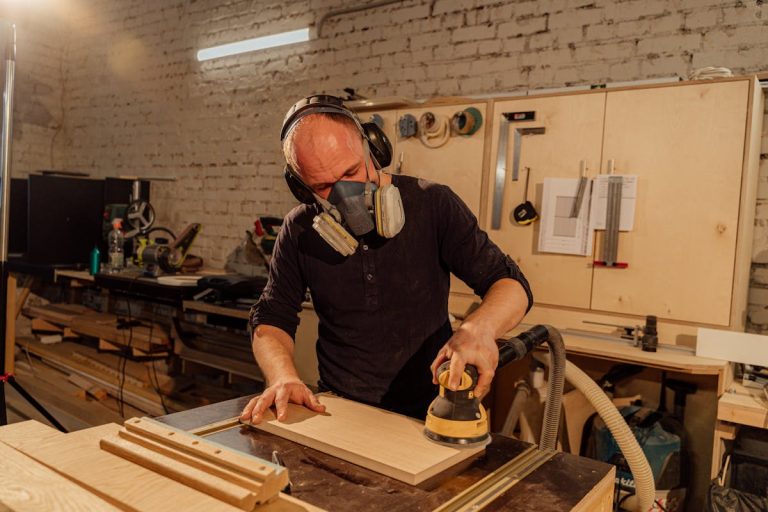
Dust collection. Sanding generates fine silica dust that is genuinely hazardous to breathe over time. Look for sanders with micro-filter dust bags or a vacuum port for shop-vac hookup. Models with vacuum port compatibility (like the Makita BO5041) capture far more dust than onboard bags alone. Always wear a dust mask regardless of which collection system you use.
Pad and paper system. Hook-and-loop (Velcro-style) pads dominate the 5-inch market and are the best option for fast grit changes. Make sure replacement pads and abrasives are widely available for your model — all four picks above use standard 5-inch, 8-hole discs that you can find at any hardware store. Pad quality matters too: a flat, firm pad gives more consistent sanding across the full surface.
Final Verdict
For most woodworkers, the DeWalt DWE6423 is the right call — it balances power, ergonomics, and price better than anything else in its class. If you do fine finishing work regularly or sand for extended periods, invest in the Makita BO5041 for its superior vibration control and vacuum-port compatibility. The Bosch ROS20VSC is the specialist’s choice for furniture and cabinet work where swirl-free results are non-negotiable. And if you’re just getting started or need a capable sander for painting prep and rough work, the Ryobi RS290G delivers real value at a price that leaves budget for abrasives and accessories.