Best Wood Routers for Beginners in 2026: Top 4 Picks for Every Budget
Picking your first wood router can feel overwhelming — there are dozens of models, conflicting reviews, and a wide range of prices. The good news: a handful of routers have earned near-universal praise from hobbyists and pros alike. This guide breaks down the four best wood routers for beginners in 2026, from a powerful full-size combo kit to a cordless model that goes anywhere you do.
What Makes a Good Beginner Router?
A beginner router needs to be forgiving, not just powerful. Look for variable speed control — it lets you slow down for delicate trim work and open up for hogging through hardwood. Soft-start electronics are equally important: they prevent the tool from twisting out of your grip the moment you pull the trigger.
Ergonomics matter too. A router you’ll actually pick up and use is better than a technically superior tool that’s uncomfortable to hold. Aim for something under 7 lbs for handheld use, with a rubberized grip and intuitive depth adjustment. Most beginners are best served by a 1¼ to 2¼ HP motor — enough to cut profiles, dadoes, and mortises without being overkill for simple edge work.
Quick Comparison
| Product | Best For | Price | Buy |
|---|---|---|---|
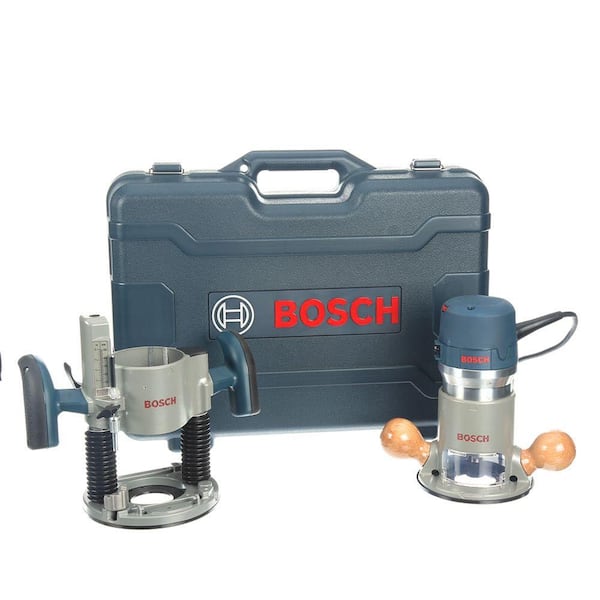 Bosch 1617EVSPK Bosch 1617EVSPK |
Best overall combo kit | ~$215 | Check Price |
 DeWalt DWP611PK DeWalt DWP611PK |
Best compact combo kit | ~$161 | Check Price |
 Makita RT0701C Makita RT0701C |
Best budget compact router | ~$133 | Check Price |
 DeWalt DCW600B DeWalt DCW600B |
Best cordless router | ~$119 | Check Price |
1. Bosch 1617EVSPK — Best Overall Combo Kit
The Bosch 1617EVSPK has been the go-to beginner recommendation for years — and it still earns that title in 2026. The kit includes both a fixed base and a plunge base, a 12-amp / 2.25 HP motor, and accepts both ¼-inch and ½-inch collets. Variable speed runs from 8,000 to 25,000 RPM, and the soft-start electronics prevent the sudden lurch that catches beginners off guard.
The depth-adjustment ring clicks in precise 1/64-inch increments — a feature woodworkers genuinely appreciate when dialing in a rabbet or dado. At around 7.5 lbs for the motor unit alone, it’s not the lightest option, but the balanced ergonomics keep fatigue manageable. Bosch packs everything into a hard case, which is a nice touch for organization and storage. Expect to pay around $215 for the full kit.
2. DeWalt DWP611PK — Best Compact Combo Kit
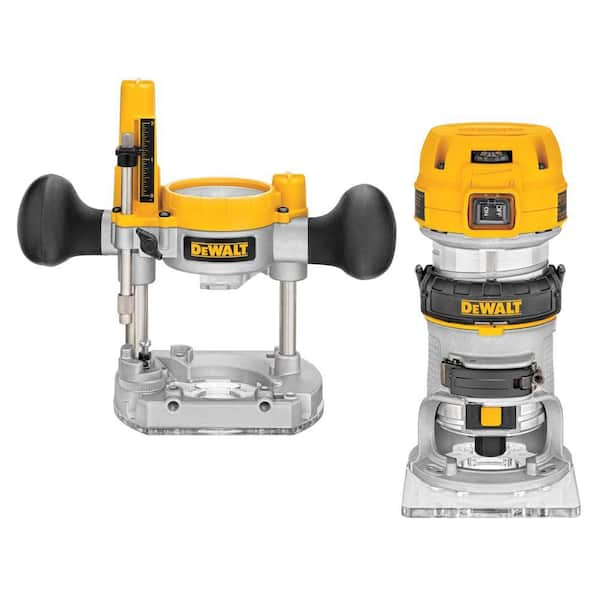
If the Bosch feels like too much router for your current projects, the DeWalt DWP611PK is the compact alternative most beginners should seriously consider. It packs a 1.25 HP motor into a trim-router-sized body that weighs just 5.6 lbs with the fixed base. Like the Bosch, it comes with both a fixed and a plunge base, giving you versatility without bulk.
Two integrated LED lights illuminate the cut area — a small detail that makes a real difference when you’re tracing a template or following a pencil line. Variable speed spans 16,000 to 27,000 RPM, which is slightly higher than the Bosch but still controllable for profile work. The release clamp makes swapping bases fast, and the above-the-table bit-height adjustment (with the optional router table) is a genuine time-saver. At around $161, it’s the better value for anyone focused on trim work and lighter routing tasks.
3. Makita RT0701C — Best Budget Compact Router
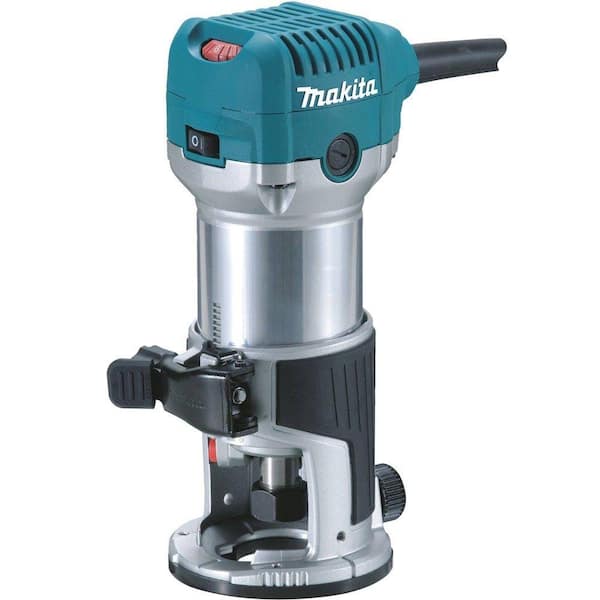
The Makita RT0701C is the leanest option on this list — it comes only with a fixed base, no plunge base in the standard package. But at around $133, it’s a smart buy for beginners who mainly want to cut edge profiles and run simple dadoes without overspending. The 6.5-amp motor delivers variable speeds from 10,000 to 30,000 RPM — the widest range here — and the slow-start feature gradually builds to operating speed, avoiding the start-up jolt entirely.
At just 3.9 lbs, the RT0701C is the lightest router on this list by a significant margin. That featherweight feel translates directly into less fatigue on long edge-routing sessions. The quick-release base makes bit changes straightforward, and the router fits most trim-router table slots. If you decide later that you need a plunge base, Makita sells the RT0700 plunge base separately.
4. DeWalt DCW600B — Best Cordless Router
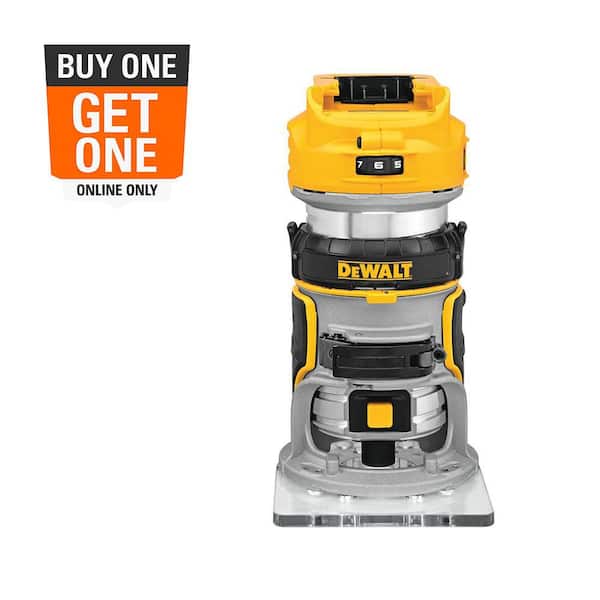
Cordless routers used to be underpowered compromises. The DeWalt DCW600B changes that story. Running on the 20V MAX XR battery platform (battery sold separately), this brushless router delivers performance very close to its corded siblings. Speed range is 16,000 to 27,000 RPM — identical to the DWP611 — and the motor maintains consistent speed under load without bogging down.
At just 2.6 lbs without battery, it’s almost effortless to maneuver. That makes it ideal for trim work, sign carving, and any routing job where you need to move freely around a workpiece. The dual LEDs carry over from the DWP611, and the precision depth adjustment works the same way. The tool-only price is around $119, making it surprisingly affordable if you’re already in the DeWalt battery ecosystem. Pair it with a 5.0 Ah battery for consistent performance through longer sessions.
Buying Guide: What to Look For in a Beginner Router
Motor power: For most beginner tasks — edge profiles, dadoes, rabbets, and template routing — a 1¼ to 1½ HP motor is plenty. You only need 2+ HP if you plan to run large panel-raising bits or do heavy production work. Starting with more power than you need just means more weight and fatigue.
Fixed vs. plunge base: A fixed base is simpler and more stable for through cuts and edge work. A plunge base lets you start a cut in the middle of a board — essential for mortises and inlay work. Combo kits that include both give you maximum flexibility as your skills grow.
Collet size: Most router bits come in ¼-inch shank, but the best bits — especially large profile and joinery bits — come in ½-inch shank. If you plan to expand your bit collection, a router that accepts both sizes (like the Bosch 1617EVSPK) is worth the investment.
Bit speed: Larger bits need slower speeds to avoid burning the wood or destroying the bit. Variable speed is non-negotiable. As a rule of thumb: smaller bits run fast (20,000–25,000 RPM), larger bits run slow (10,000–15,000 RPM).
Final Verdict
If you want the most versatile starter router with room to grow, buy the Bosch 1617EVSPK — the combo kit will handle nearly any routing task you encounter in the first several years of woodworking. On a tighter budget, the DeWalt DWP611PK is the smarter compact buy if you value trim and lightweight handling. Already own DeWalt 20V batteries? The DCW600B is a no-brainer pickup. Any of these four routers will serve a beginner woodworker well — pick the one that matches your budget and workspace, and start routing.