Best Reciprocating Saws of 2026: Top Cordless Picks for Demolition and Remodeling
A reciprocating saw is the tool you reach for when precision stops mattering and progress starts. Nail-embedded studs, cast iron pipe, rusted bolts, overgrown branches — a good recip saw goes through all of it.
The catch is that these saws punish you for buying badly. A cheap one vibrates until your forearms ache and stalls halfway through a 2×4 with a nail in it.
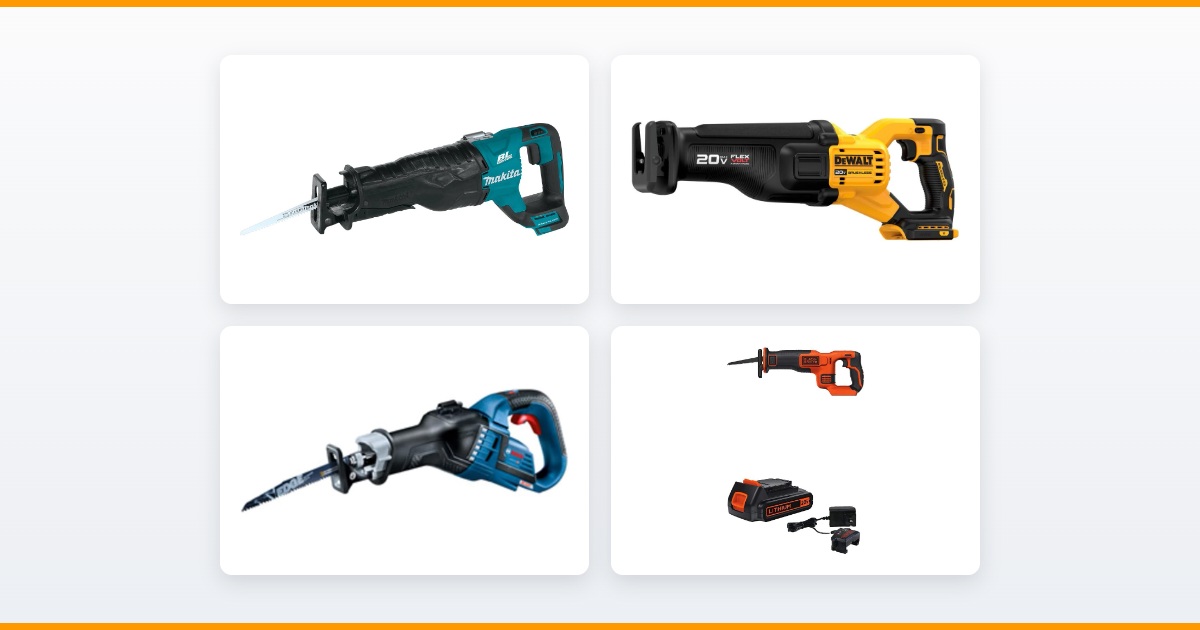
We looked at the cordless models worth owning in 2026 and picked four that cover every budget from weekend demo work to daily jobsite abuse.
Quick Comparison
| Product | Best For | Stroke / SPM | Price | Buy |
|---|---|---|---|---|
 Makita XRJ05Z Makita XRJ05Z |
Best overall | 1-1/4″ / 0–3,000 | $219 | Check Price |
 DeWalt DCS386B DeWalt DCS386B |
Best for demolition | 1-1/8″ / 0–3,000 | $179 | Check Price |
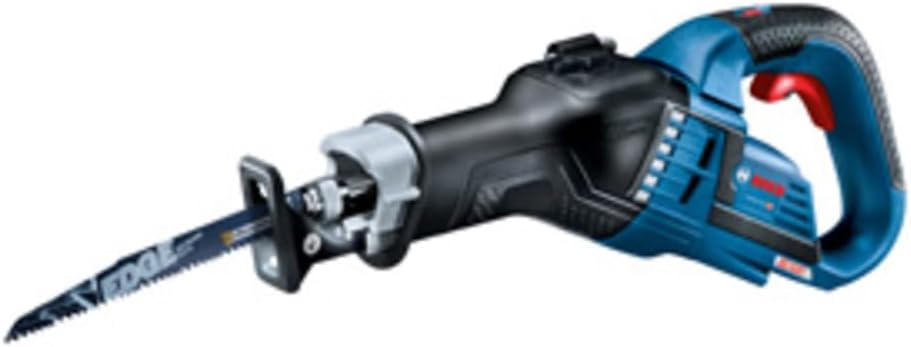 Bosch GSA18V-125N Bosch GSA18V-125N |
Best vibration control | 1-1/4″ / 0–2,500 | $129 | Check Price |
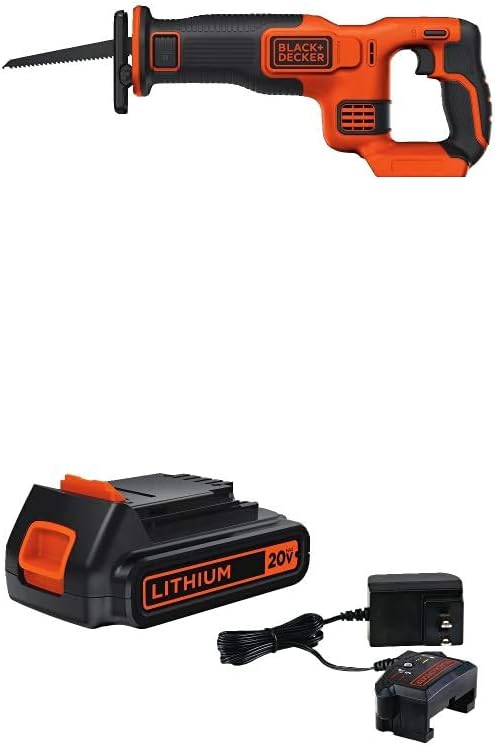 BLACK+DECKER BDCR20B Kit BLACK+DECKER BDCR20B Kit |
Best budget pick | 7/8″ / 0–3,000 | $72 | Check Price |
1. Makita XRJ05Z — Best Overall
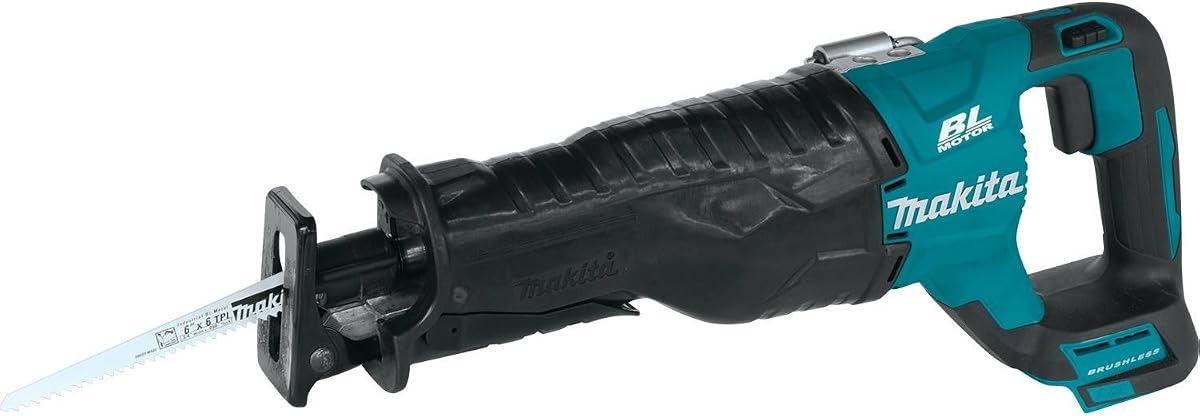
The Makita XRJ05Z is the recip saw that most tradespeople end up keeping. Its brushless motor runs two speed ranges — 0–2,300 SPM for controlled starts in metal, 0–3,000 SPM when you just want the cut finished.
The 1-1/4-inch stroke is as long as anything in this class, which means fewer strokes per cut and less heat in the blade.
At 17-1/4 inches long and 8.2 lbs with a battery, it threads between joists and studs where a longer saw simply won’t fit. Tool-less blade changes and a variable-speed trigger round it out.
Pros: Long 1-1/4″ stroke, two-speed brushless motor, compact body, excellent build quality.
Cons: Sold bare — you need to be on the 18V LXT platform already, or the real cost climbs fast.
Already own Makita 18V LXT batteries? This is the easiest upgrade on the list — around $219 for the bare tool, and it will outlast most of what is in your van.
Check Price on Amazon →2. DeWalt DCS386B — Best for Demolition
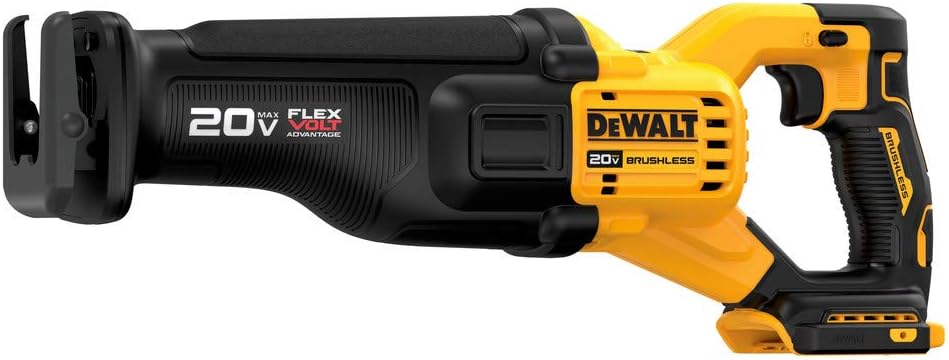
If your work involves tearing things apart rather than trimming them, the DCS386B is the pick. With a FLEXVOLT battery it delivers up to 50% more power than it does on a standard 20V pack — useful when you are cutting nail-embedded lumber all afternoon.
It runs 0–3,000 SPM with a 1-1/8-inch stroke and weighs 7.7 lbs bare, so it stays manageable overhead.
The keyless lever-action blade clamp matters more than it sounds: in demo work you change blades constantly, often with gloves on.
Pros: Big power on FLEXVOLT packs, bright LED, fast blade changes, Tool Connect ready.
Cons: Shorter stroke than the Makita; you want a FLEXVOLT battery to see the full benefit.
Doing a gut renovation? Around $179 bare, this is the saw that turns a weekend demo into an afternoon one.
Check Price on Amazon →3. Bosch GSA18V-125N — Best Vibration Control
Bosch built this one around comfort. Counterbalance technology cancels much of the shake that makes long cutting sessions miserable, and the angled-motor design keeps the saw balanced in your hands.
Three orbital settings let you dial aggression up for framing lumber or down for metal and PVC, and the 1-1/4-inch stroke at 0–2,500 SPM is plenty for most work.
It is the saw to buy if you cut overhead, at odd angles, or for hours at a time.
Pros: Best-in-class vibration control, three orbital settings, long stroke, comfortable grip.
Cons: Slower top speed than rivals; 19 inches long, so tight cavities are harder.
Cutting all day? At roughly $129 this is the cheapest way to save your wrists — and the long stroke means you are not giving up cutting speed to get there.
Check Price on Amazon →4. BLACK+DECKER BDCR20B — Best Budget Pick
For homeowners who need a recip saw a few times a year, spending $200 on a bare tool makes no sense. This kit lands around $72 with a 20V battery and charger included, so there is nothing else to buy.
You get 0–3,000 SPM, tool-free blade changes and a pivoting shoe. The 7/8-inch stroke is short, so it works harder than the pro saws on thick material.
For pruning, pallet breakdown, PVC and the occasional wall opening, it is enough saw.
Pros: Battery and charger included, light, genuinely cheap, fits the wider 20V MAX range.
Cons: Short stroke, brushed motor, noticeable vibration on long cuts.
Just need it for the yard and the odd project? Battery and charger are in the box for about $72 — the cheapest complete way onto this list.
Check Price on Amazon →How to Choose a Reciprocating Saw
Stroke length is the spec that matters
Stroke length decides how much blade passes through the material each cycle. A 1-1/4-inch stroke cuts noticeably faster than a 7/8-inch one and keeps blades cooler, because more teeth share the work.
Orbital action: use it selectively
Orbital modes swing the blade in a slight ellipse and rip through wood. Switch orbital off for metal, PVC and anything where a clean edge matters — otherwise you will cook blades and chip material.
Weight and length beat raw power
Most cuts with a recip saw happen at shoulder height or above, in a space that barely fits your hands. A saw that is two pounds lighter and two inches shorter will finish more work than a heavier saw with better numbers on paper.
Stay on one battery platform
Bare tools cost far less than kits. If you already own 18V LXT or 20V MAX batteries, buying bare is the cheapest way to add a saw — and the reason platform loyalty pays off over time.
Frequently Asked Questions
Is a reciprocating saw the same as a Sawzall?
Sawzall is Milwaukee’s trademark, the way Sharpie is a brand of marker. Every saw here is a reciprocating saw; only Milwaukee’s are Sawzalls.
What blade should I start with?
A 6-inch, 6-TPI bi-metal blade handles most wood and nail-embedded lumber. Add a 14–18 TPI blade for metal and a longer 9-inch blade for pruning.
Corded or cordless in 2026?
Cordless has caught up for all but continuous heavy demolition. If you cut all day every day, corded still wins on sustained power and never needs a battery swap.
The Verdict
For most buyers the Makita XRJ05Z is the right saw: long stroke, compact body, and the build quality to survive years of abuse.
Choose the DeWalt DCS386B if your days are demolition and you own FLEXVOLT batteries, the Bosch GSA18V-125N if comfort over long sessions matters most, and the BLACK+DECKER BDCR20B kit if you just need a capable saw a few weekends a year.
More Reciprocating Saws Guides
- Reciprocating Saw vs Jigsaw: Which Do You Actually Need?
- Best Portable Table Saws of 2026: Jobsite Picks for Contractors and DIYers
- Best Heat Guns of 2026: Top Picks for Paint Stripping, DIY & Pro Use
- Best Corded Angle Grinders in 2026: DeWalt, Bosch, Makita & Ryobi Compared
- Best Oscillating Multi-Tools of 2026: Top 4 Picks for Every Budget